What it treats
Laser skin resurfacing in Brentwood and Los Angeles: what it treats.
Skin resurfacing is facial rejuvenation aimed at the quality of the skin itself. A resurfacing laser treatment can improve fine lines and wrinkles, sun damage and age spots, uneven tone, and rough texture.
The right treatment is not automatically the strongest one. It is the one that appropriately balances the amount of correction your skin needs with the downtime, risk, and recovery you can accommodate.
Two kindsAblative lasers remove microscopic columns of skin; nonablative lasers heat them and leave the surface intact
Recovery variesFrom some redness with gentler lasers to a week or longer with CO2
GradualCollagen rebuilds over the weeks and months after treatment
Five officesThe lasers differ by office
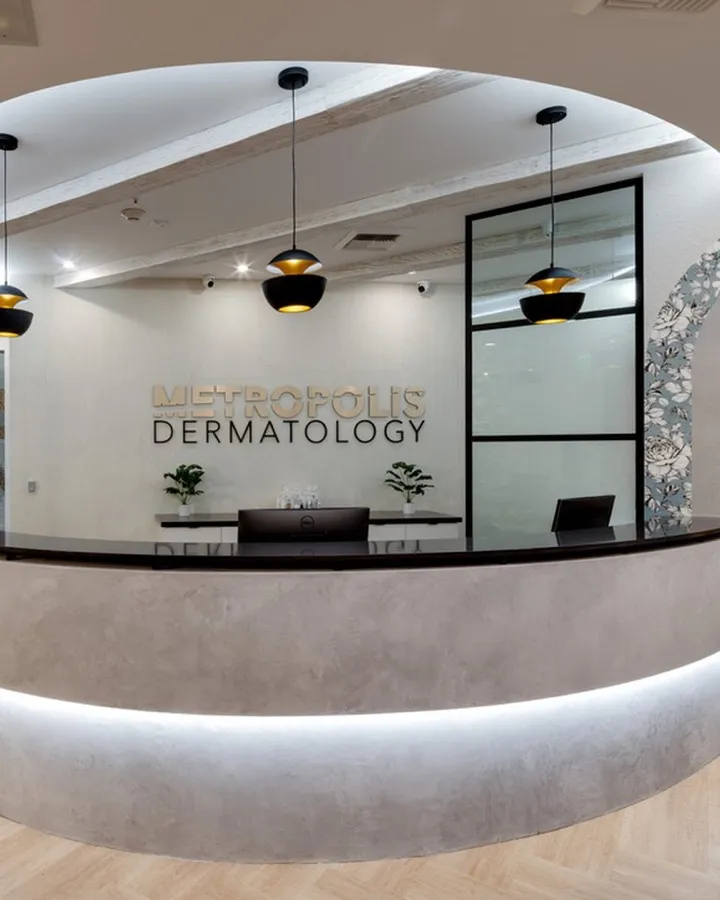
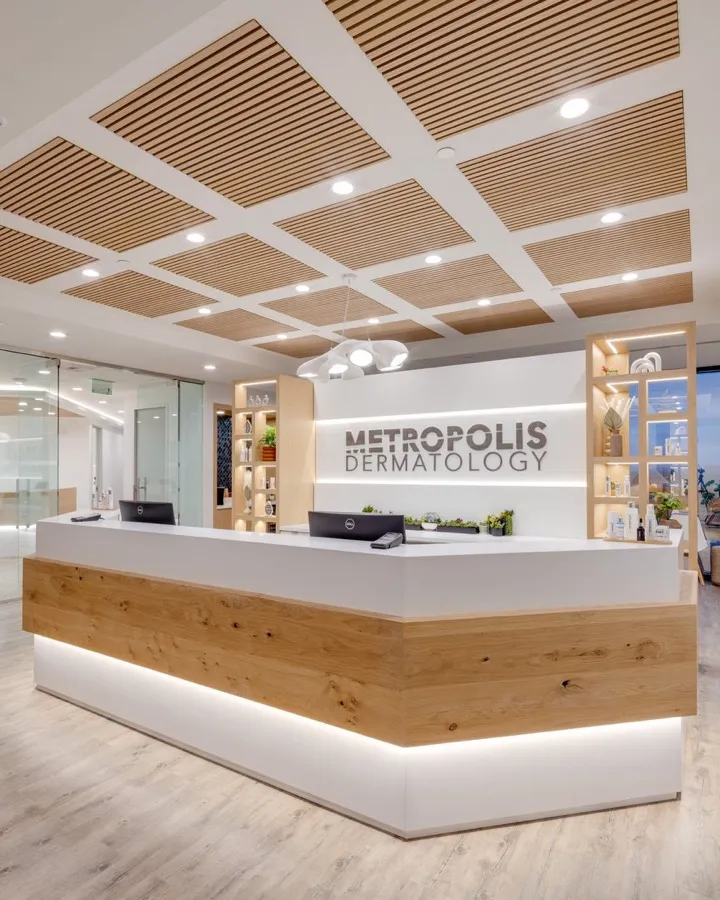
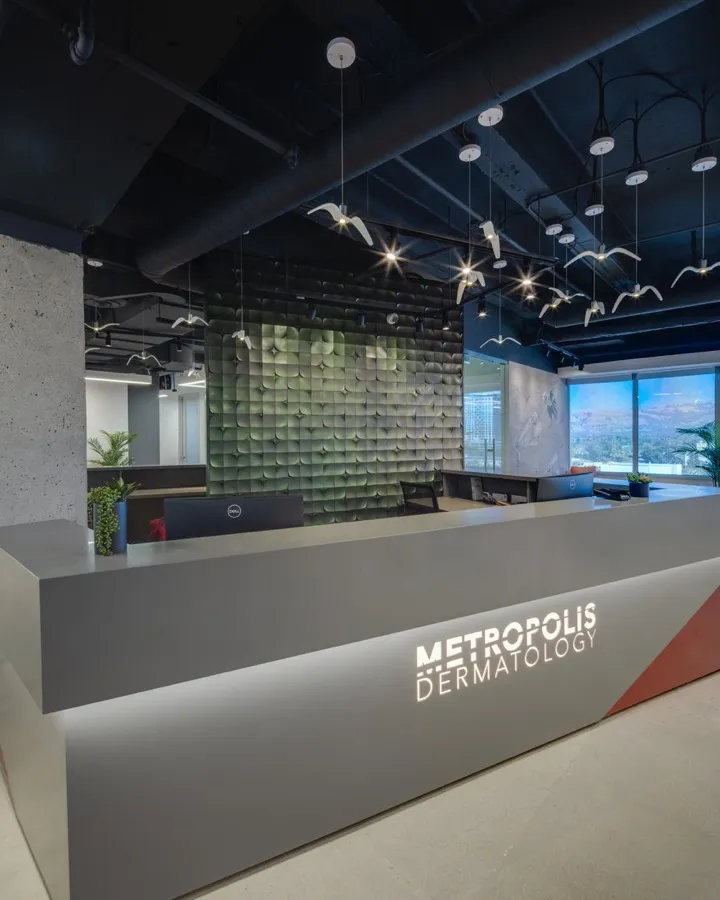
Laser skin resurfacing is offered at all five Metropolis offices: Downtown Los Angeles, Brentwood, Pasadena, Costa Mesa, and San Jose, each with its own set of devices. Our Brentwood office, with particular depth in advanced lasers and resurfacing, offers the LaseMD Ultra, the Spectra MDF, and the eCO2.
Scars are a separate question. For acne scars, surgical scars, and raised or red scars, see laser scar treatment, which matches the laser to the type of scar. This page covers resurfacing for lines, sun damage, tone, and texture.
Ablative or nonablative
Ablative or nonablative laser resurfacing: downtime by type.
Laser resurfacing types, gentlest to most intensive
| Type | What the laser does | Our lasers | Recovery |
|---|
| Nonablative fractional | Heats microscopic columns of skin and leaves the surface intact | LaseMD Ultra | Shorter than ablative resurfacing; redness and sensitivity vary with treatment intensity and your skin |
|---|
| Fractional, in between | Fractional treatment between very gentle lasers and deeper resurfacing, adjusted in depth and intensity | Spectra MDF; UltraClear | Less than ablative CO2; settings follow the downtime you can accommodate |
|---|
| Ablative fractional CO2 | Vaporizes microscopic columns of skin | eCO2, EdgeOne, Alma Hybrid | Often a week or longer, depending on depth and intensity |
|---|
| Laser-Coring | Removes microscopic columns of tissue for deeper wrinkles and folds | UltraClear | More recovery; reserved for carefully selected patients |
|---|
The right point on this range depends on how much change your skin needs, weighed against how much downtime you can accommodate.
Gentler nonablative lasers heal faster, and harsher ablative lasers tend to be more effective. Fractional treatment spreads the laser's effect across the skin, which shortens downtime and lowers the chance of complications, though it can mean more sessions.
What the first days look like
After a laser treatment, redness usually settles within several hours to a few days, and swelling can last several days. Where the laser opens the surface, crusts form and clear over several days to weeks as the skin heals. How long each lasts depends on the laser, the depth, and your skin, so your provider tells you what to plan for before you book.
How it works
How laser skin resurfacing works.
Fractional pattern
The laser treats microscopic zones of skin in a controlled pattern and leaves the skin between them untouched, which helps the treated skin heal from the edges.
Ablative
An ablative laser, such as CO2, vaporizes those microscopic columns, removing a small fraction of the skin's surface at each spot.
Nonablative
A nonablative laser heats the columns without removing the surface. LaseMD Ultra is a nonablative fractional laser that creates a controlled pattern of microscopic treatment zones while leaving the surrounding skin intact.
Collagen
As the skin heals, it remodels. The FDA clearance for the Alma Hybrid states that clinical literature shows CO2 resurfacing of wrinkles increases the amount of collagen beneath the skin's surface. That is why improvement builds gradually.
Depending on your needs, a plan may incorporate treatments for tightening, pigmentation, texture, scarring, resurfacing, or recovery support, performed in one visit or thoughtfully staged over time.
Our resurfacing lasers
Resurfacing lasers we use, and what each is FDA-cleared for.
Lasers are FDA-cleared, not FDA-approved: the FDA found each device equivalent to one already on the market, for the specific uses named in its clearance. Where a use is not named, we say so.
- LaseMD UltraLaseMD Ultra is a nonablative fractional laser that creates a controlled pattern of microscopic treatment zones while leaving the surrounding skin intact. It can be used for pigmentation, sun damage, uneven tone, texture, and overall skin quality. This often makes it a useful introduction to fractional laser treatment. LaseMD Ultra (Lutronic) is listed with the FDA under 510(k) K192331 (LaseMD LEO, November 2019; the earlier LASEMD, K171009, June 2017, has the same uses), cleared for coagulation of soft tissue, treatment of actinic keratosis, and treatment of benign pigmented lesions such as age spots, sun spots, and freckles. Texture and overall skin quality are not named in its clearance. On the scalp, the same laser is part of KeraLase, a separate treatment for hair thinning. Available at: Downtown LA, Brentwood, Pasadena, San Jose.
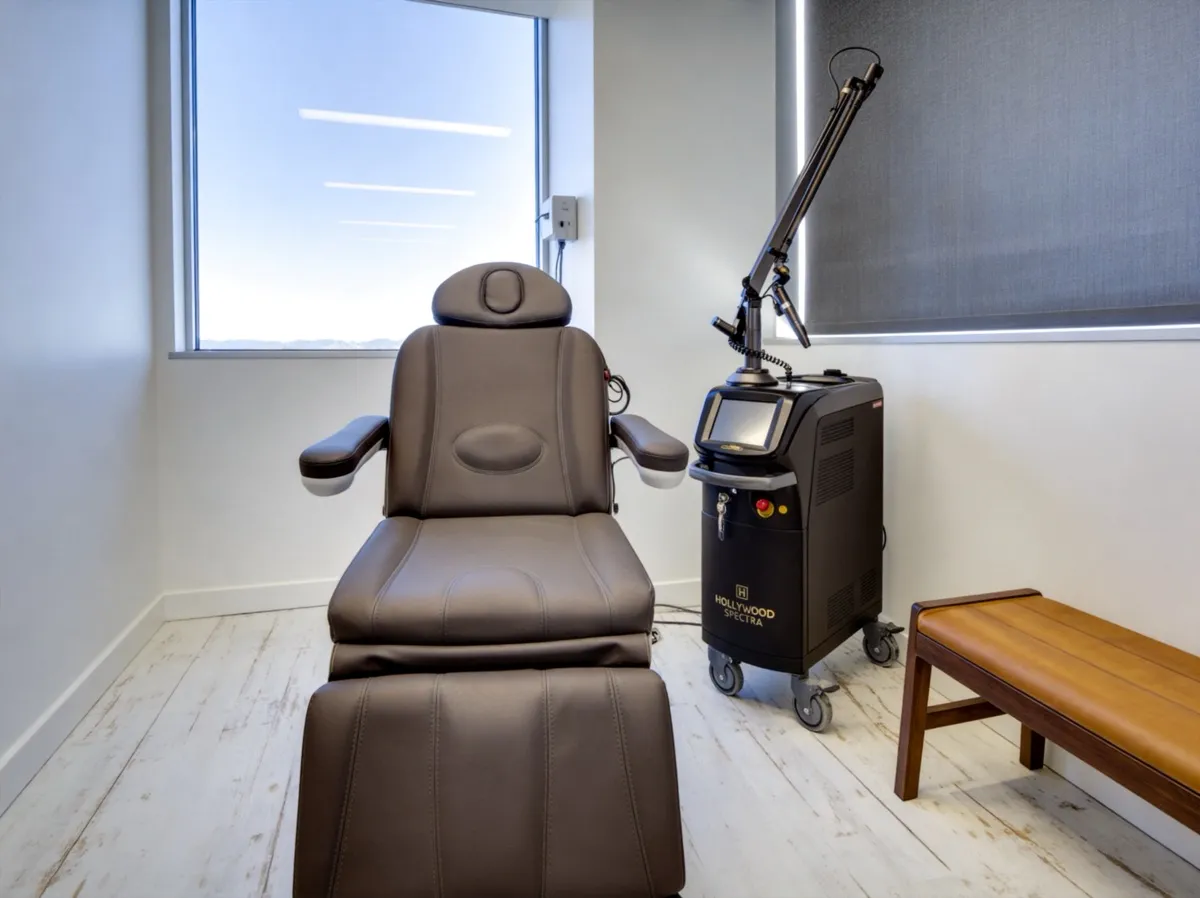
- Spectra MDFSpectra MDF provides fractional laser treatment with less recovery than traditional ablative CO2 resurfacing. It can be used for selected concerns involving texture, scars, pores, and uneven tone. Settings can be adjusted based on how much correction is needed and how much downtime the patient can accommodate. It runs on the Hollywood Spectra laser (Lutronic), FDA-cleared in February 2022 (510(k) K213569) for skin resurfacing procedures for the treatment of acne scars and wrinkles. Pores and texture are not named in its clearance. Available at: Downtown LA, Brentwood, Pasadena, San Jose.
- UltraClear and Laser-CoringStudied in Fitzpatrick skin types II to IV, UltraClear scar treatmentStudied UltraClear scar treatment UltraClear is a customizable fiber laser that can treat skin at different depths and levels of intensity. Depending on the selected mode, it may be used for pigmentation, uneven tone, texture, wrinkles, scars, and more advanced resurfacing. Laser-Coring is a more intensive UltraClear treatment designed to remove microscopic columns of tissue and address deeper wrinkles and folds. The UltraClear (a 2,910 nm fiber laser) is FDA-cleared (510(k) K210847, December 2021) for general skin resurfacing procedures and, in its Ultra mode, for fractional treatment of wrinkles and for scar revision, including acne scars. Laser-Coring is not named in the clearance. Available at: Costa Mesa.
- eCO2 and EdgeOne CO2Studied in Fitzpatrick skin types III to IVStudied eCO2 and EdgeOne are fractional ablative CO2 lasers designed for more significant resurfacing. They may be considered for deeper texture irregularities, acne scars, wrinkles, and sun damage that may not respond sufficiently to gentler treatments. These treatments involve meaningful recovery. Depending on the depth and intensity, downtime is often a week or longer. We recommend them when the potential degree of improvement justifies the additional recovery and risk. The eCO2 3D (Lutronic) is FDA-cleared (510(k) K244060, July 2025) with its fractional handpieces for resurfacing, and for treating wrinkles, fine lines, textural irregularities, pigmented lesions, and vascular dyschromia. The EdgeOne (Jeisys) is cleared (K162169, October 2016) for ablative skin resurfacing; wrinkles and sun damage are not named in its clearance. Available at: eCO2: Brentwood, San Jose. EdgeOne: Pasadena.
- Alma HybridDowntown LA uses the Alma Hybrid CO2 laser (Alma Lasers), FDA-cleared (510(k) K251230, May 2025) with its CO2 applicators for laser skin resurfacing to treat wrinkles, rhytids, and furrows, including fine lines and texture irregularities, and for uneven pigmentation and sun-damaged skin (solar elastosis). Available at: Downtown LA.
FDA clearance status checked against FDA 510(k) records on 8 November 2026. Every device we use
Is it right for you
Who laser skin resurfacing suits, and who should wait.
Often a good fit
- Fine lines and wrinkles
- Sun damage, age spots, and uneven tone, once a dermatologist has confirmed the spots are harmless
- Rough or uneven texture
- Deeper texture irregularities and sun damage that have not responded to gentler treatment, if you can plan for a week or longer of recovery
- People who want gradual improvement and can match the depth of treatment to the downtime they have
Not a fit, or wait
- A tan or sunburn on the day of treatment
- Isotretinoin now or in the last 6 months, for laser resurfacing
- Smoking: stop at least 2 weeks before
- A history of cold sores: tell us first, because medicine to prevent an outbreak is recommended
- Melasma: an overly aggressive treatment can trigger rebound pigmentation and leave the skin darker than before
- A spot that has not been checked: confirmed harmless first, treated second
Timing matters after isotretinoin. The medication label advises waiting at least 6 months before laser resurfacing or dermabrasion; some gentler treatments may be possible sooner, and your dermatologist will time each step.
For brown patches on the cheeks, forehead, or upper lip, see melasma treatment first. Melasma is especially sensitive to heat and inflammation, and it is treated conservatively.
Darker skin tones
Laser skin resurfacing for darker skin tones.
Skin type is one of the first considerations in any laser treatment, not a footnote. Different wavelengths and technologies interact with pigment, blood vessels, water, and tissue in different ways. The device matters, but so do the settings, technique, and experience of the person using it.
Darker skin is more prone to burns and dark marks after laser treatment, and skin can also turn lighter. With ablative lasers, people with darker skin have a higher risk of uneven color and of scarring. Nonablative treatments generally have a more favorable safety profile, particularly in skin of color, and fractional resurfacing has fewer complications than conventional ablative resurfacing.
Darkening is common, and it is often temporary. In one study of 82 people with skin types III and IV treated with a fractional CO2 laser, about 7 in 10 had temporary darkening afterward, and in about 1 in 3 it lasted longer than three months. In another study of ablative CO2 resurfacing, darkening usually appeared about four weeks after treatment and faded gradually over months.
Both the energy and the density of a fractional treatment affect the risk of dark marks, which is why settings are chosen for your skin rather than taken from a standard menu. Aggressive resurfacing without a plan can make it worse.
Our technology was selected to treat a broad range of skin tones and concerns thoughtfully. If the treatment you requested is not appropriate for your skin, we will explain why and recommend a safer or more effective alternative.
Skin types on the Fitzpatrick scale, from I (lightest) to VI (deepest). Filled numbers are the types each treatment is cleared, treated, or studied for. Ranges for a treatment in general and for a specific device can differ, because they come from different studies. Your provider confirms the right approach for your skin at your visit.
Your plan
What a laser resurfacing plan involves.
ConsultationTell us what you notice, what you want to change, and how much downtime you can accommodate. We will evaluate the rest and build a plan around you.
BeforeNo tan or sunburn; tell us about cold sores and isotretinoin; stop smoking as directed
SessionsGentler fractional lasers often mean more sessions; deeper CO2 resurfacing often means fewer, with more recovery
RecoveryFrom redness and sensitivity with nonablative lasers to a week or longer with CO2
ResultsBuild gradually as collagen remodels
AfterwardProtect the treated skin from the sun until it heals
Risks
Laser skin resurfacing risks and side effects.
Most reactions are short-lived. This list is not complete; your provider reviews the risks for your device and skin.
| Effect | What to know |
|---|
| Redness, swelling, crusting | Expected. Redness usually settles within hours to a few days; swelling can last several days; crusts clear as the skin heals. |
| Downtime | Shorter with nonablative lasers; often a week or longer after CO2 resurfacing. |
| Darker or lighter skin, burns | Among the most common lasting complications, and more likely in darker skin. Darkening is often temporary but can last months. |
| Cold sore outbreak or infection | More likely with ablative lasers, while the surface heals. Tell us if you get cold sores. |
| Scarring | One of the most serious complications. The risk is higher with ablative lasers and in darker skin. |
Other options
Other ways to improve skin quality, and when they fit better.
Skin quality treatments that are not resurfacing lasers
| Treatment | Where it fits | Good to know |
|---|
| Chemical peels | Uneven tone, acne, congestion, and texture | Superficial peels generally involve little recovery; deeper peels need more preparation and downtime |
|---|
| Microneedling | Texture and collagen support | Fine needles at a calibrated depth; your skin's repair response drives the collagen |
|---|
| RF microneedling | Texture, acne scars, pores, and mild laxity | Adds radiofrequency energy beneath the surface, at selected depths |
|---|
| PRP / PRF for facial rejuvenation | Collagen support from your own blood | Built on your own biology rather than an injected product |
|---|
| PRP microneedling | Microneedling with your own platelet-rich plasma | Supports the healing response already underway; not an FDA-approved use of microneedling devices |
|---|
| Skin tightening | Mild to moderate laxity | Collagen remodeling beneath the surface, built over weeks to months |
|---|
| Enlarged pore treatment | Visible pores | Treatments that improve oil control, texture, and collagen support can make pores appear smaller over time |
|---|
| Carbon laser facial | A brighter, smoother look | A low-downtime laser facial without traditional resurfacing |
|---|
Depending on your needs, a plan may combine resurfacing with these treatments, in one visit or staged over time. Combination protocols
Questions
Laser skin resurfacing questions.
What is the difference between ablative and nonablative laser resurfacing?
An ablative laser, such as CO2, vaporizes microscopic columns of skin; a nonablative laser heats them and leaves the surface intact. Ablative resurfacing can create more significant change but needs more recovery; nonablative treatment heals faster and improves the skin more gradually.
How much downtime does laser skin resurfacing have?
It depends on the laser and the depth. With a nonablative laser such as LaseMD Ultra, recovery is shorter, though redness and sensitivity vary with treatment intensity. With fractional CO2 resurfacing, downtime is often a week or longer. Downtime by type
Can laser resurfacing be done on darker skin?
It can be done carefully, with the device and settings chosen for your skin. Darker skin is more prone to burns and dark marks after laser treatment, and the risk of uneven color and scarring is higher with ablative lasers, which is why skin type comes first in the plan. Darker skin tones
How long after isotretinoin can I have laser resurfacing?
The medication label advises waiting at least 6 months before laser resurfacing or dermabrasion; some gentler treatments may be possible sooner, and your dermatologist will time each step.
How many sessions will I need?
It depends on the laser. Gentler fractional treatments often take more sessions; deeper resurfacing often takes fewer, with more recovery. The number is set at your consultation, once we know what you want to change and how much downtime you can accommodate.
Does laser resurfacing treat acne scars?
Several of our resurfacing lasers are FDA-cleared for acne scars, but scars are planned by type. Laser scar treatment explains which laser fits which scar.
Is laser skin resurfacing covered by insurance?
Insurance is accepted for eligible medical care. Health insurance generally does not cover cosmetic treatments, so our team confirms costs before your first session.
How much does laser skin resurfacing cost?
Plans and costs are set at your consultation, once we know what you want to change and which treatments fit.
Where can I get laser skin resurfacing near Brentwood?
At our Brentwood office, 11645 Wilshire Blvd, Suite 900, Los Angeles, CA 90025, and at our Downtown LA, Pasadena, Costa Mesa, and San Jose offices. Where to go
Sources: FDA 510(k) clearances for LASEMD, Hollywood Spectra, UltraClear, eCO2 3D, EdgeOne and Alma Hybrid; American Academy of Dermatology on skin conditions lasers treat; Fu and colleagues, 2019; Harnchoowong and colleagues, 2024; Nguyen and colleagues, 2026.