Our advanced lasers and technology.
We are less interested in how many devices we own than in what each one allows us to do. Every platform at Metropolis was selected for a specific purpose: treating a broader range of skin tones, reaching a particular depth, targeting a certain type of pigment or vessel, or offering a different balance between correction and recovery.
Technology provides options. Knowing which device to use, and how to use it, is what makes those options meaningful.
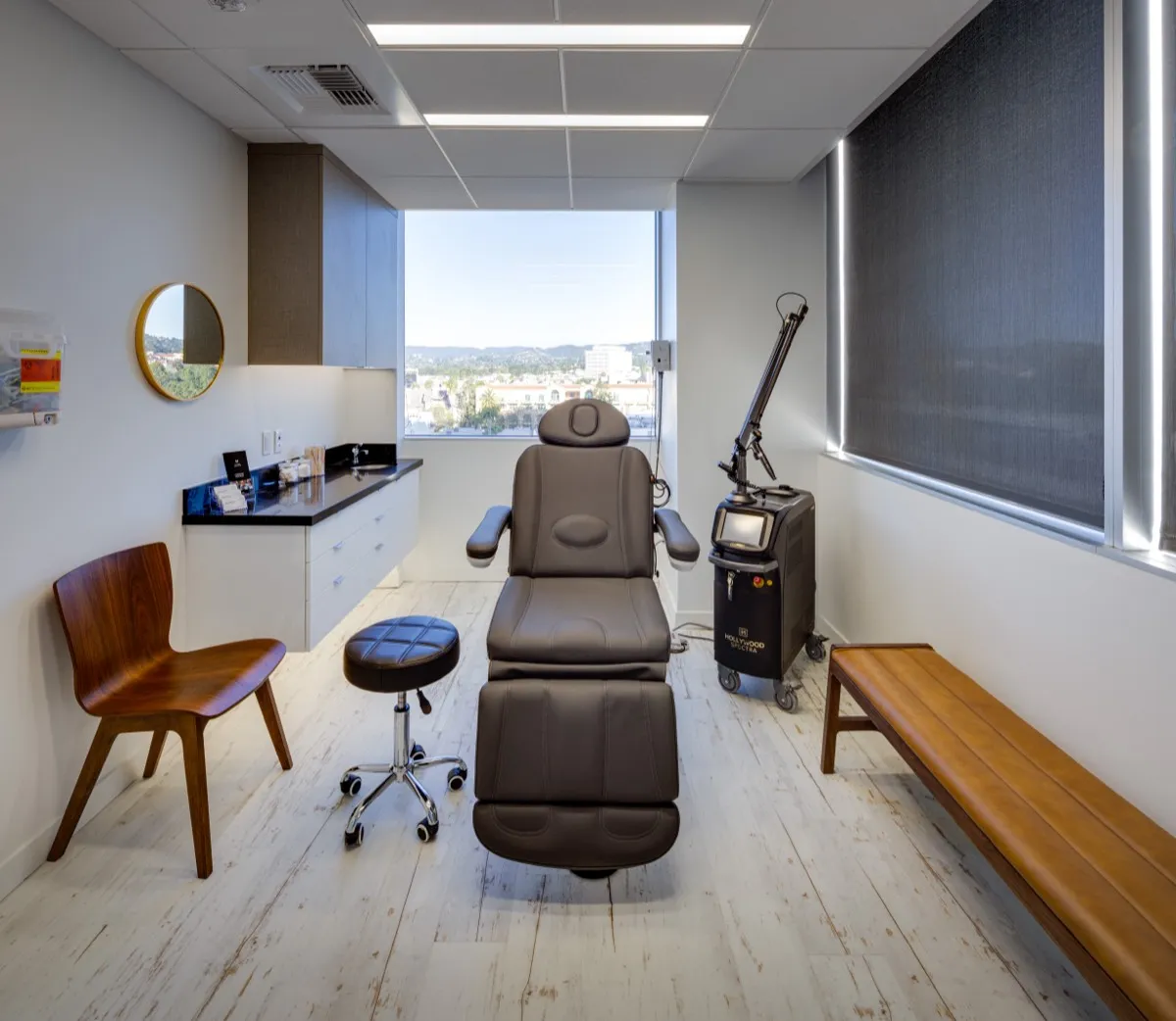
Not sure which device fits? We match the technology to your skin, not your skin to a treatment menu.
Your plan and cost are set at your consultationPigment, tone, and tattoos.
- Hollywood Spectra and TriBeamHollywood Spectra and TriBeam are versatile pigment-focused lasers. By changing the wavelength, handpiece, and settings, we can address concerns such as unwanted pigmentation, uneven tone, and selected tattoos. These platforms can also perform a low-downtime carbon laser facial for patients seeking a brighter, smoother appearance without traditional resurfacing. Available at: Hollywood Spectra: Downtown LA, Brentwood, Pasadena, San Jose. TriBeam: office to confirm.
- LaseMD UltraLaseMD Ultra is a nonablative fractional laser that creates a controlled pattern of microscopic treatment zones while leaving the surrounding skin intact. It can be used for pigmentation, sun damage, uneven tone, texture, and overall skin quality. Recovery is generally shorter than with ablative resurfacing, although redness and sensitivity vary with treatment intensity and individual skin response. This often makes it a useful introduction to fractional laser treatment. LaseMD Ultra is FDA-cleared for benign pigmented lesions such as sun spots and freckles, actinic keratosis, and coagulation of soft tissue; texture and overall skin quality are not cleared uses. Available at: Downtown LA, Brentwood, Pasadena, San Jose.
- Pico laser What picosecond lasers are, and which of our lasers treat the same tattoo and pigment concerns.
Redness and vessels.
- DermaV and V-LaserFDA-cleared in Fitzpatrick skin types I to VI, DermaV 1064 nm hair removalFDA-cleared DermaV 1064 nm hair removal DermaV and V-Laser are designed to treat vascular and pigment-related concerns. Different wavelengths, pulse durations, and settings allow us to target visible blood vessels, persistent redness, and selected pigmentation with greater specificity. The correct application depends on what is causing the color. Red pigment, brown pigment, and general inflammation may look similar to a patient but require different treatment strategies. Available at: DermaV: Downtown LA, Brentwood, Pasadena, San Jose. V-Laser: Costa Mesa.
Hair removal.
- Clarity II and Sandro DualFDA-cleared in Fitzpatrick skin types I to VI, hair removalFDA-cleared hair removal These dual-wavelength platforms allow us to treat unwanted hair, pigmentation, and selected vascular concerns across a broad range of skin tones. Having more than one wavelength matters because different skin types and concerns require different approaches. The FDA clearance names skin types I to VI for hair removal only; for pigment and vessels, your provider assesses your skin. Available at: Clarity II: Downtown LA, Brentwood, Pasadena, San Jose (hair and pigment); Costa Mesa (vessels). Sandro Dual: Costa Mesa.
Resurfacing, scars, and texture.
Listed from gentlest to most intensive.
- Spectra MDFSpectra MDF provides fractional laser treatment with less recovery than traditional ablative CO2 resurfacing. It can be used for selected concerns involving texture, scars, pores, and uneven tone. It occupies a useful position between very gentle treatments and deeper resurfacing. Spectra MDF runs on the Hollywood Spectra, which is FDA-cleared for resurfacing of acne scars and wrinkles; pores are not a cleared use. Available at: Downtown LA, Brentwood, Pasadena, San Jose.
- Genius RF MicroneedlingStudied in Fitzpatrick skin types I to IVStudied Genius combines microneedling with radiofrequency energy delivered beneath the skin's surface. During treatment, the system monitors tissue impedance and adjusts energy delivery in real time. Genius may be used for acne scars, uneven texture, enlarged pores, and mild skin laxity. Genius is FDA-cleared for electrocoagulation and hemostasis; these cosmetic uses are not cleared uses, and your provider explains why it may still be recommended. Available at: Downtown LA, Brentwood, Pasadena, San Jose. Costa Mesa uses a different RF microneedling system.
- UltraClear and Laser-CoringStudied in Fitzpatrick skin types II to IV, UltraClear scar treatmentStudied UltraClear scar treatment UltraClear is a customizable fiber laser that can treat skin at different depths and levels of intensity. Depending on the selected mode, it may be used for pigmentation, uneven tone, texture, wrinkles, scars, and more advanced resurfacing. Laser-Coring is a more intensive UltraClear treatment designed to remove microscopic columns of tissue and address deeper wrinkles and folds. It represents a distinct level of treatment with more recovery and is reserved for carefully selected patients whose concerns justify a more aggressive approach. Available at: Costa Mesa.
- eCO2 and EdgeOne CO2Fractional CO2 studied in Fitzpatrick skin types III to IVStudied fractional CO2 eCO2 and EdgeOne are fractional ablative CO2 lasers designed for more significant resurfacing. These treatments involve meaningful recovery. Depending on the depth and intensity, downtime is often a week or longer. We recommend them when the potential degree of improvement justifies the additional recovery and risk. In one study of fractional CO2 in skin types III and IV, most patients developed dark spots, and in some they lasted more than three months. Available at: eCO2: Brentwood, San Jose. EdgeOne: Pasadena. Downtown LA uses the Alma Hybrid CO2.
Skin tightening.
- Density RF and Oligio XDensity RF and Oligio X use monopolar radiofrequency energy to heat deeper tissue and stimulate collagen remodeling without breaking the skin's surface. These treatments generally suit mild to moderate laxity rather than replacing surgery. Density RF and Oligio X are FDA-cleared for electrocoagulation and hemostasis; skin tightening is not a cleared use, and your provider explains why it may still be recommended. Available at: Density: Brentwood. Oligio X: Pasadena, San Jose. Costa Mesa uses a different radiofrequency device.
Hair thinning.
- KeraLaseKeraLase combines the LaseMD Ultra laser with a topical scalp serum. It may be incorporated into a broader treatment plan for selected types of hair thinning. Because hair loss can have many causes, we begin with a diagnosis. Hair growth is not an FDA-cleared use of the LaseMD Ultra, and the serum is not an FDA-approved hair treatment. Available at: Downtown LA, Brentwood, Pasadena, San Jose. Costa Mesa pairs the serum with UltraClear.
Body contouring.
- truSculpt iDtruSculpt iD uses monopolar radiofrequency energy to heat targeted areas of subcutaneous fat. It is intended for body contouring, not weight loss, and suits localized areas that remain despite an otherwise stable routine. truSculpt iD is FDA-cleared for the abdomen; other areas are not a cleared use. Available at: Offices to confirm.
- truSculpt flextruSculpt flex uses electrical stimulation to produce controlled muscle contractions. It is designed to improve muscle tone, firmness, and definition rather than reduce fat. truSculpt flex is FDA-cleared for muscle tone of the abdomen, buttocks, and thighs; arms are not a cleared use. Available at: Offices to confirm.
Before and after gallery · What patients say · See who performs these treatments at each office: our providers.
How to read the skin type marks.
Empty numerals were not covered by the clearance or the studies reviewed, which is not the same as unsafe. Studies under-include skin types V and VI. Most FDA clearances name no skin types at all.
We match the technology to your skin, not your skin to a treatment menu. If the treatment you requested is not appropriate, we will explain why and recommend a better option when one exists.
Tell us what brings you in.
Share what is happening with your skin and where you would like to go from here. We will help match you with the right provider and type of visit.
- Devices chosen for a broader range of skin tones
- Plans and costs set at your consultation