We treat the entire acne cycle.
We treat the entire acne cycle: active breakouts, the marks or scars they leave behind, and the maintenance needed to reduce recurrence. Each stage may require a different approach.
What causes acne.
Acne starts when pores get clogged with oil and dead skin cells. Bacteria that normally live on the skin can then grow in the plugged pore and cause inflammation. It is the most common skin condition in the United States, and people of every race and age get it.
Hormones
Androgens can enlarge oil glands and raise oil output, which is why acne often rises with puberty and hormone shifts.
Family history
You may be more likely to get acne if your parents had it.
Medications
Some medicines, including hormone-containing medications, corticosteroids, and lithium, can cause acne.
Stress and products
Stress does not cause acne but can make it worse. Oily makeup, skincare, and hair products can add to breakouts.
Diet research is still developing. Some studies suggest certain foods may make acne worse, but the 2024 acne guideline found the evidence too limited to recommend a diet change as treatment.
Types of acne
Whiteheads and blackheadsPores plugged with oil and dead skin cells
Papules and pustulesRed pimples, without pus or with pus
Nodules and cystsDeeper, often painful, and can leave scars
Adult acneCan continue or start in your 30s, 40s, and 50s, more often in women
Adult acne
Adult acne is not always teenage acne that stayed too long. Adult acne may be influenced by hormones, genetics, medications, skincare, stress, and other factors. A routine built for adolescent skin may be too irritating, or simply aimed at the wrong cause.
Acne in every skin tone.
Skin conditions do not always look or behave the same across skin tones. Melasma, post-inflammatory pigmentation, acne, keloids, and even skin cancer may present differently, and the same treatment settings are not appropriate for every patient.
Melasma, hyperpigmentation, keloids, acne, and acne scarring require an understanding of how inflammation and pigment behave in different skin tones. We account for those differences from the beginning rather than adjusting only after a complication occurs.
In deeper skin tones, a breakout often leaves a dark spot that lasts longer than the pimple, and raised scars such as keloids are more common. Treating acne early helps prevent both. Peels, lasers, and even at-home versions of these treatments can leave lasting dark or light marks, which is why settings are chosen for your skin rather than taken from a standard chart.
Active acne.
Treatment may include a customized skincare plan, topical or oral prescriptions, spironolactone for appropriate hormonal patterns, isotretinoin when warranted, and targeted cortisone injections for selected deep, painful lesions. Superficial peels, facials, or gentle energy-based treatments may also complement medical treatment for selected patients.
Skin types on the Fitzpatrick scale, from I (lightest) to VI (deepest). Filled numbers are the types each treatment is cleared, treated, or studied for. Ranges for a treatment in general and for a specific device can differ, because they come from different studies. Your provider confirms the right approach for your skin at your visit.
How long treatment takes
- Your first visit
We identify the type of acne, what is driving it, and what has not worked before.
- Weeks 6 to 8
Most treatments need at least this long before breakouts lessen, so sticking with the plan through this window matters.
- Months 2 to 3
Clearing can take two to three months or longer, and the plan is adjusted at follow-up.
- Clear skin
Keep treating after skin clears; a maintenance routine helps prevent new breakouts.
- Then the marks and scars
Once breakouts are controlled, marks and scars get their own plan.
Treatment options, by what they do
How dermatologists build an acne plan, from the 2024 AAD acne guideline
| Option | Where it fits | Good to know |
|---|
| Topical retinoids and benzoyl peroxide | First-line for most acne | Both are strongly recommended in the 2024 guideline |
|---|
| Antibiotics, topical or oral | Added for a limited time | Paired with benzoyl peroxide or other topicals, not used alone; oral courses kept short, usually 3 to 4 months at most |
|---|
| Hormonal treatment | Targets hormone-driven acne | Spironolactone or combined birth control pills; spironolactone is not used in pregnancy |
|---|
| Isotretinoin | A daily pill for the hardest-to-treat acne | For severe, scarring, or treatment-resistant acne, with monitoring |
|---|
| Cortisone injection | Can settle one large, painful breakout | Used sparingly, for selected lesions |
|---|
Which acne scar is it, and what treats it.
Acne scar removal starts with naming each scar, because acne scars do not all respond to the same procedure.
Scar types and the treatments most often matched to them
| What you see | Type | Often treated with |
|---|
| Deep, narrow pits, like a puncture | Ice pick (the most common type) | TCA CROSS, one scar at a time |
|---|
| Round or oval dips with sharper edges | Boxcar | RF microneedling, microneedling, or laser resurfacing |
|---|
| Wide, shallow waves in the skin | Rolling | Subcision, often with filler or microneedling |
|---|
| Raised, firm scars | Hypertrophic or keloid | Steroid injections or laser |
|---|
| Flat red, pink, or brown spots | Marks, not scars | Sunscreen, time, and topical care; see marks below |
|---|
TCA CROSS is a focused treatment for individual deep, narrow acne scars, particularly ice-pick scars. A concentrated solution is placed precisely within each scar to stimulate localized remodeling. TCA is not FDA-approved for acne scars (checked 8 November 2026); your dermatologist explains why it may still be recommended.
Depressed acne scars are sometimes held down by fibrous bands beneath the skin. Subcision releases those bands so the scar can lift closer to the level of the surrounding skin.
Depending on the type and depth of the scar, subcision may be combined with platelet-rich plasma, Sculptra, filler, microneedling, or laser resurfacing. Sculptra is FDA-approved for smile lines and facial wrinkles, and PRP is not FDA-approved for scars; using either for acne scars is off-label, and your dermatologist explains why it may still be recommended. The combination is selected based on what is causing each scar, not simply because multiple treatments are available.
Related: Combination protocols
In deeper skin tones, the choice of device and settings affects the risk of dark marks. Radiofrequency energy is not absorbed by skin pigment the way laser light is, which may lower the risk of dark marks in deeper skin tones.
Proper scar classification and careful application are especially important in patients prone to post-inflammatory pigmentation.
Acne scar treatment.
Acne scars do not all respond to the same procedure. Once breakouts are sufficiently controlled, or, in selected cases, while acne treatment continues, we develop a separate plan based on scar type. Options may include TCA CROSS, subcision, microneedling, laser resurfacing, filler, or other injectable treatments.
Sessions, recovery, and cost
How many sessionsDepends on the scar type and treatment; TCA CROSS usually takes multiple sessions
RecoveryRanges from little downtime to a week or longer for deeper laser resurfacing
CostQuoted at your consultation, once the plan is set
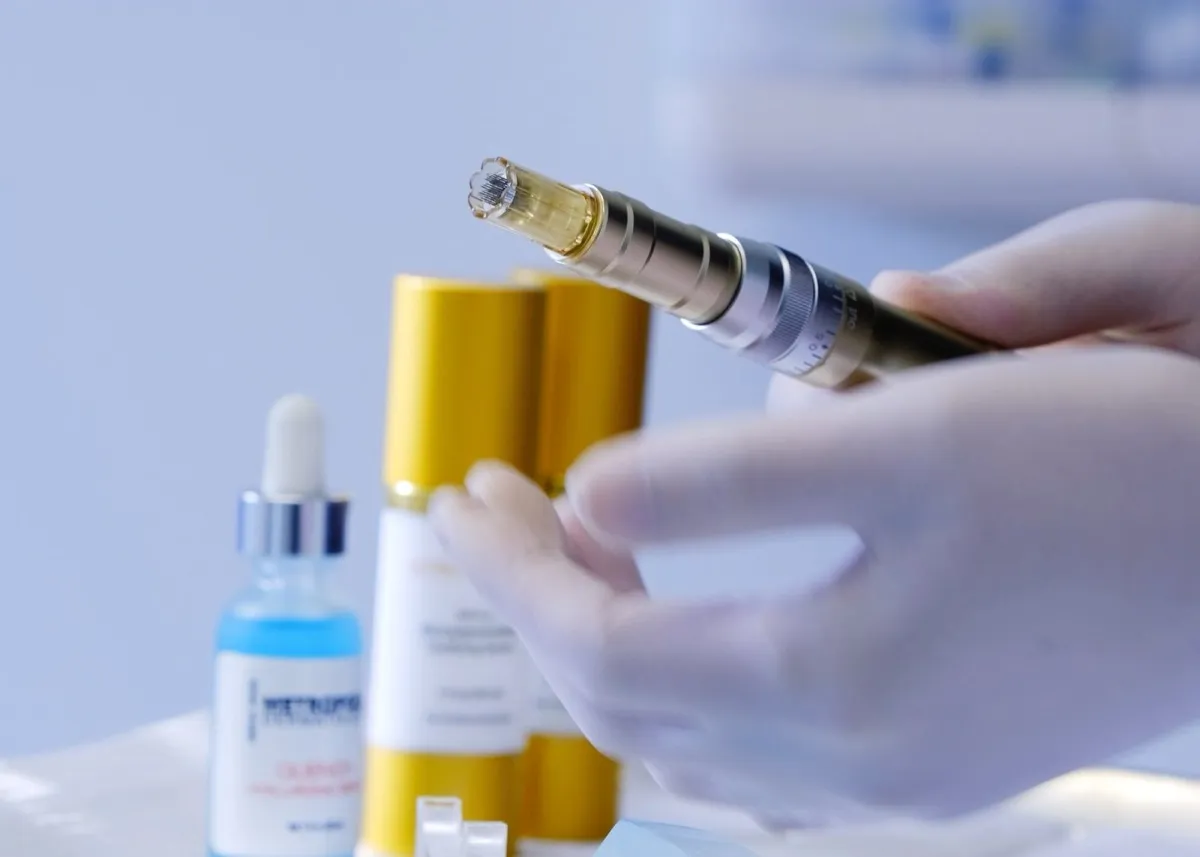
Metropolis Matrix Protocol. Built for scarring and texture: subcision with Sculptra, Spectra MDF, then microneedling with PRP on top. Microneedling devices are FDA-authorized for facial acne scars, but not for delivering PRP into the skin, and using Sculptra for acne scars is off-label.
Devices we may use for acne scars
- Genius RF MicroneedlingStudied in Fitzpatrick skin types I to IVStudied Genius may be used for acne scars, uneven texture, enlarged pores, and mild skin laxity.
- eCO2 and EdgeOne CO2Studied in Fitzpatrick skin types III to IVStudied They may be considered for deeper texture irregularities, acne scars, wrinkles, and sun damage that may not respond sufficiently to gentler treatments. These treatments involve meaningful recovery. Depending on the depth and intensity, downtime is often a week or longer. We recommend them when the potential degree of improvement justifies the additional recovery and risk.
- Spectra MDF Spectra MDF provides fractional laser treatment with less recovery than traditional ablative CO2 resurfacing. It can be used for selected concerns involving texture, scars, pores, and uneven tone.
- UltraClearStudied in Fitzpatrick skin types II to IVStudied UltraClear is a customizable fiber laser that can treat skin at different depths and levels of intensity. Depending on the selected mode, it may be used for pigmentation, uneven tone, texture, wrinkles, scars, and more advanced resurfacing.
Marks left after acne.
The red or brown marks that remain after a breakout are not the same as permanent scars. Post-inflammatory erythema and hyperpigmentation can last for months, particularly in deeper skin tones, and require a different treatment strategy. Overly aggressive treatment can make discoloration worse.
Flat dark spots usually fade, often within 6 to 12 months. Daily sunscreen is the foundation, and retinoids or azelaic acid can help lighten them.
What is the most effective product for acne scars?
No single product treats every acne scar, because the right approach depends on the type. For flat red or brown marks, daily sunscreen is the foundation, and retinoids or azelaic acid can help lighten them. For scars that change the texture of the skin, such as pits and dips, a product on its own will not reshape the skin, and procedures such as TCA CROSS, subcision, microneedling or laser resurfacing are matched to the scar type.
Maintenance.
Clearer skin is not the end of the plan. A sustainable combination of skincare, prescription treatment when needed, and periodic in-office care can help reduce the cycle of new breakouts and new marks.
Every day
- Wash gently, up to twice a day and after sweating
- Use products labeled non-comedogenic
- Wear broad-spectrum SPF 30 or higher
- Keep using your maintenance treatment after skin clears
Avoid
- Picking or popping, which makes acne take longer to clear
- Scrubbing tools and harsh, drying products
- Heavy oils on the hairline and face
Other skin concerns
Questions patients ask.
How long does acne treatment take to work?
Most treatments need at least 6 to 8 weeks before breakouts lessen, and clearing can take two to three months or longer.
Is acne only a teenage problem?
No. Some adults continue to get acne in their 30s, 40s, and 50s, and women get adult acne more often than men.
Does diet cause acne?
The research is still developing. Some studies suggest certain foods may make acne worse, but there is not enough evidence to treat acne with diet alone.
What is the difference between acne marks and acne scars?
Marks are flat red or brown spots that usually fade with time. Scars change the texture of the skin, as dips or raised areas.
Are acne scars permanent, or can they be improved?
Scars can usually be made less noticeable, but treatment rarely removes a scar completely. How much a scar improves depends on its type and depth. The right treatment depends on the type of scar, and some treatments, such as TCA CROSS, take multiple sessions. The combination is selected based on what is causing each scar, not simply because multiple treatments are available.
Can scars be treated while I still have breakouts?
Usually the breakouts are brought under control first. Once breakouts are sufficiently controlled, or, in selected cases, while acne treatment continues, we develop a separate plan based on scar type.
Why do some people scar while others don't?
Deeper breakouts such as nodules and cysts can leave scars, and raised scars are more common in darker skin. Treating acne early helps prevent scars.
How are scar treatments planned for darker skin?
Treatment for darker skin is planned around the risk of dark marks. Proper scar classification and careful application are especially important in patients prone to post-inflammatory pigmentation, and device settings are chosen for your skin.
Should I pop my pimples?
No. Picking or popping makes acne take longer to clear and raises the risk of marks and scars.
Is acne treatment covered by insurance?
Insurance is accepted for eligible medical care. Coverage varies by plan, so ask our team before your visit. See understanding your insurance.
View the before and after galleryRead patient reviews