Sunspot removal: confirmed harmless first, removed second.
Yes, sunspots can be removed once a dermatologist has confirmed they are harmless. There are a few methods, and the right one depends on the type of lesion, its location, your skin tone and the likelihood of discoloration or recurrence.
Sunspots, also called age spots or solar lentigines, are flat brown spots that appear where the sun's rays often reach the skin, such as the face and hands.
Most brown spots that appear with age are accumulated sun damage: cosmetically bothersome, medically unremarkable.
Once the spot has been evaluated, we can discuss the most appropriate removal method. The recommendation depends on the type of lesion, its location, the patient's skin tone, and the likelihood of discoloration or recurrence.
Exam firstEvery spot is diagnosed before it is treated
One or twoLaser treatments can be enough for some age spots
Can returnDaily sun protection keeps new spots from forming
Short-lived marksCrusting or temporary darkening tends to fade quickly
Is it a sunspot, or something that needs attention?
Many brown spots are harmless changes related to sun exposure or aging. Others are not. The difference is not always obvious, especially when you have been looking at the same spot in the mirror every day.
What looks like an age spot can turn out to be skin cancer, which is why a board-certified dermatologist looks at it before anyone treats it.
Watching a spot may be reasonable, but only after a dermatologist has examined it and determined what it is.
There is another possibility that is often overlooked. Flat brown patches across the cheeks, forehead, or upper lip may be melasma rather than ordinary sun damage. The two conditions require different treatment strategies, and treating melasma too aggressively can make the pigmentation worse.
The first step is an accurate diagnosis. If the spot is benign and cosmetic, we can recommend an appropriate treatment based on the diagnosis, location, and skin tone. If it represents a medical concern, we address it accordingly. A spot that is new, changing, or unlike your others belongs at a mole check before any removal plan.
The exam comes first. The treatment plan follows.
Related: Which brown spots need a check
How sunspot removal works.
Diagnosis
A dermatologist confirms the spot is a harmless sunspot and not melasma or a growth that needs a medical plan.
The light finds the pigment
Pigment in the skin absorbs the laser light. The surrounding skin absorbs far less of it.
The spot lightens
The treated pigment breaks up and the body clears it. A spot can darken or crust for a short time first.
Matched to your skin
We select the technology, wavelength, depth, and settings based on your skin rather than asking your skin to fit a particular device.
Laser sunspot removal at Metropolis.
Lasers are FDA-cleared, not FDA-approved, for the uses named in each clearance. Each laser below is cleared for sunspots or for the wider group the FDA calls benign pigmented lesions. Clearances checked 8 November 2026.
Lasers we use for sunspots, by office
| Laser | FDA clearance for brown spots | Skin type | Where |
|---|
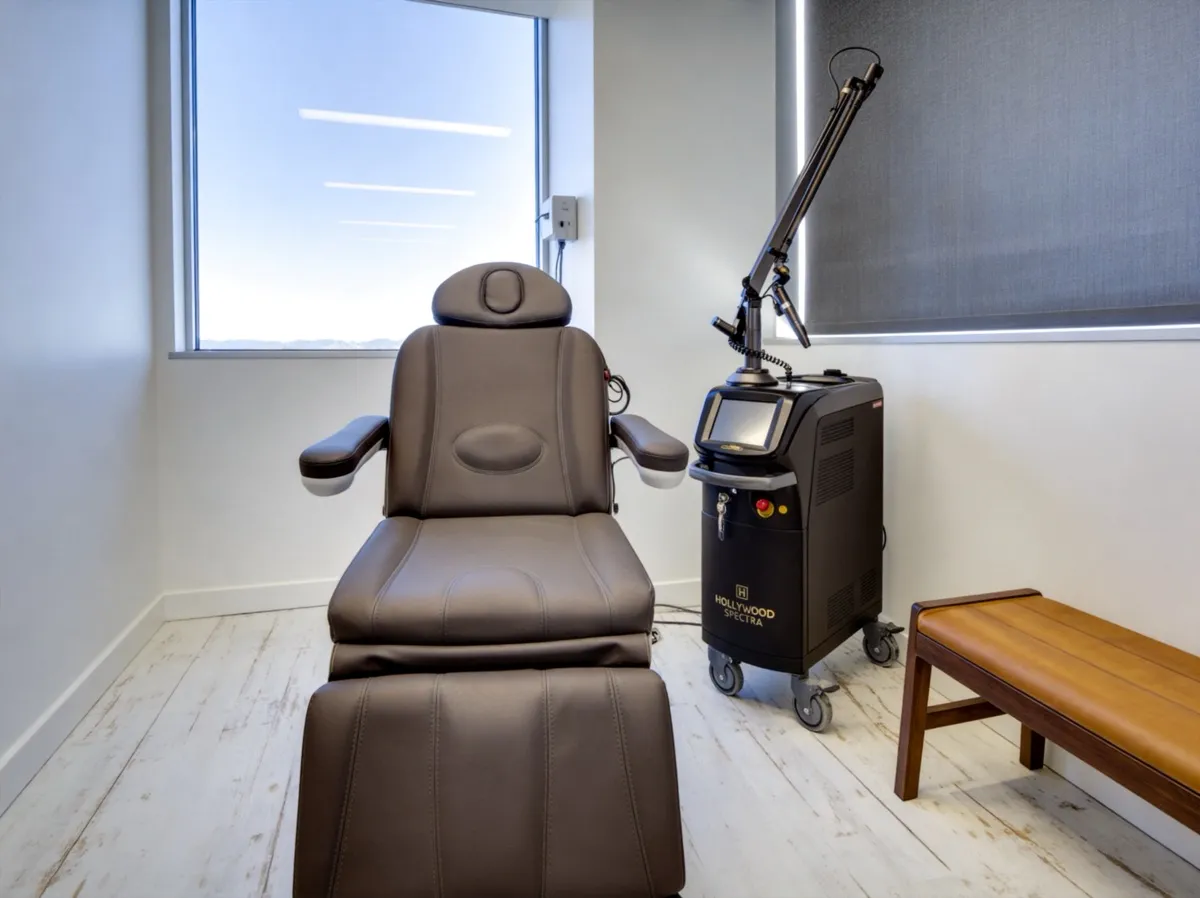
| Hollywood Spectra | Cleared at 532 nm for lentigines (sunspots), February 2022 | — | Downtown LA, Brentwood, Pasadena, San Jose |
|---|
| Clarity II | Cleared for "solar lentigos (sun spots)" and age spots, June 2019 | — | Downtown LA, Brentwood, Pasadena, San Jose |
|---|
Having more than one wavelength matters because different skin types and concerns require different approaches.
If the patches turn out to be melasma, the plan changes: see melasma laser treatment, and melasma, pigment and sun spots for how the two differ.
Is sunspot removal right for you?
Often a good fit
- Flat brown spots a dermatologist has confirmed are sunspots
- Spots on the face, hands, and other sun-exposed skin
- A spot that bothers you for how it looks, with no medical concern
Not a fit, or wait
- A spot no dermatologist has examined yet
- A spot that is new or changing: have it checked first
- Flat brown patches across the cheeks, forehead, or upper lip that may be melasma
- Darker skin, until your provider has chosen a method and settings for it
Once we have confirmed a spot is cosmetic, we develop a treatment plan for removal that is the least risk and highest efficacy possible. If it is not, we treat it as the medical concern it is. Either way, the exam is the same first step.
Your sunspot removal plan.
ExamWe confirm what the spot is before discussing removal
MethodChosen for the type of spot, where it is, your skin tone, and the chance of discoloration or return
SessionsSome age spots clear in one or two laser treatments; your provider sets the number after the exam
AfterwardShade, sun-protective clothing, and a broad-spectrum, water-resistant sunscreen, SPF 30 or higher
Long termSunspots can return; sun protection is how you keep the result
Risks and side effects.
This list is not complete; your provider goes through the risks for your method and skin at your consultation.
| Effect | What to know |
|---|
| Crusting, or the spot looking darker for a while | Common after laser treatment, and tends to fade quickly. |
| Burns and dark marks | Darker skin is more prone to them after laser treatment, which is why the method and settings are set for your skin. |
| The spot comes back | Sunspots can return after any treatment. Daily sun protection lowers the chance. |
| Blistering, or a change in skin color that does not settle | Call us. |
Sunspot removal questions.
How much does sunspot removal cost?
Cost depends on the spots, the method, and how many sessions your plan needs, so we quote it at your consultation, before you start.
Is sunspot removal covered by insurance?
Removing a confirmed sunspot for appearance is usually self-pay. If the exam finds a medical concern, that care is handled as medical care. Our team confirms costs before treatment.
Do I need an exam before sunspot removal?
Yes. Before removing a presumed sunspot, we first confirm that it is benign. What looks like an age spot can be skin cancer, so the exam is not optional. You can start with a mole check.
What is the difference between dark spots and sun spots?
Sunspots, also called age spots or solar lentigines, are flat brown spots that come from accumulated sun exposure. "Dark spots" is a broader term. Flat brown patches across the cheeks, forehead or upper lip may be melasma rather than ordinary sun damage, and a spot that is new, changing or unlike your others needs to be checked before any treatment.
What could be causing brown spots to suddenly appear on my skin?
Most brown spots that appear with age are accumulated sun damage, but a spot that is new, changing or unlike your others belongs at a mole check before any removal plan, because what looks like an age spot can turn out to be skin cancer. Flat brown patches across the cheeks, forehead or upper lip may be melasma.
Which laser is used to remove sunspots?
It depends on the spot and your skin: Hollywood Spectra or Clarity II in Downtown LA, Brentwood, Pasadena, and San Jose; in Costa Mesa, ask the office which laser fits. The recommendation depends on the type of lesion, its location, the patient's skin tone, and the likelihood of discoloration or recurrence.
Will my sunspots come back?
They can, after any treatment. Shade, sun-protective clothing, and a broad-spectrum, water-resistant sunscreen of SPF 30 or higher help keep new spots from forming.
How soon will I see results from sunspot removal?
Some treatments deliver noticeable results within a few weeks. Some age spots clear in one or two laser treatments, and your provider sets the number after the exam. A treated spot can darken or crust for a short time first.
Can sunspots be removed on darker skin?
Often, with care. Darker skin is more prone to burns and dark marks after laser treatment, so your provider chooses the laser and settings for your skin. Having more than one wavelength matters because different skin types and concerns require different approaches.
Where can I get sunspot removal?
Downtown Los Angeles, Brentwood, Pasadena, and San Jose use Hollywood Spectra or Clarity II. In Costa Mesa, ask the office which treatment fits your spots.
Sources: American Academy of Dermatology and FDA 510(k) clearances K213569, K183566, and K241144.