Subcision with PRP in Pasadena, Los Angeles, Orange County and San Jose.
Subcision, short for subcutaneous incisionless surgery, treats depressed acne scars from underneath. A needle or blunt cannula is passed under the scar to release the scar tissue holding it down, and the small injury it makes prompts new connective tissue to form.
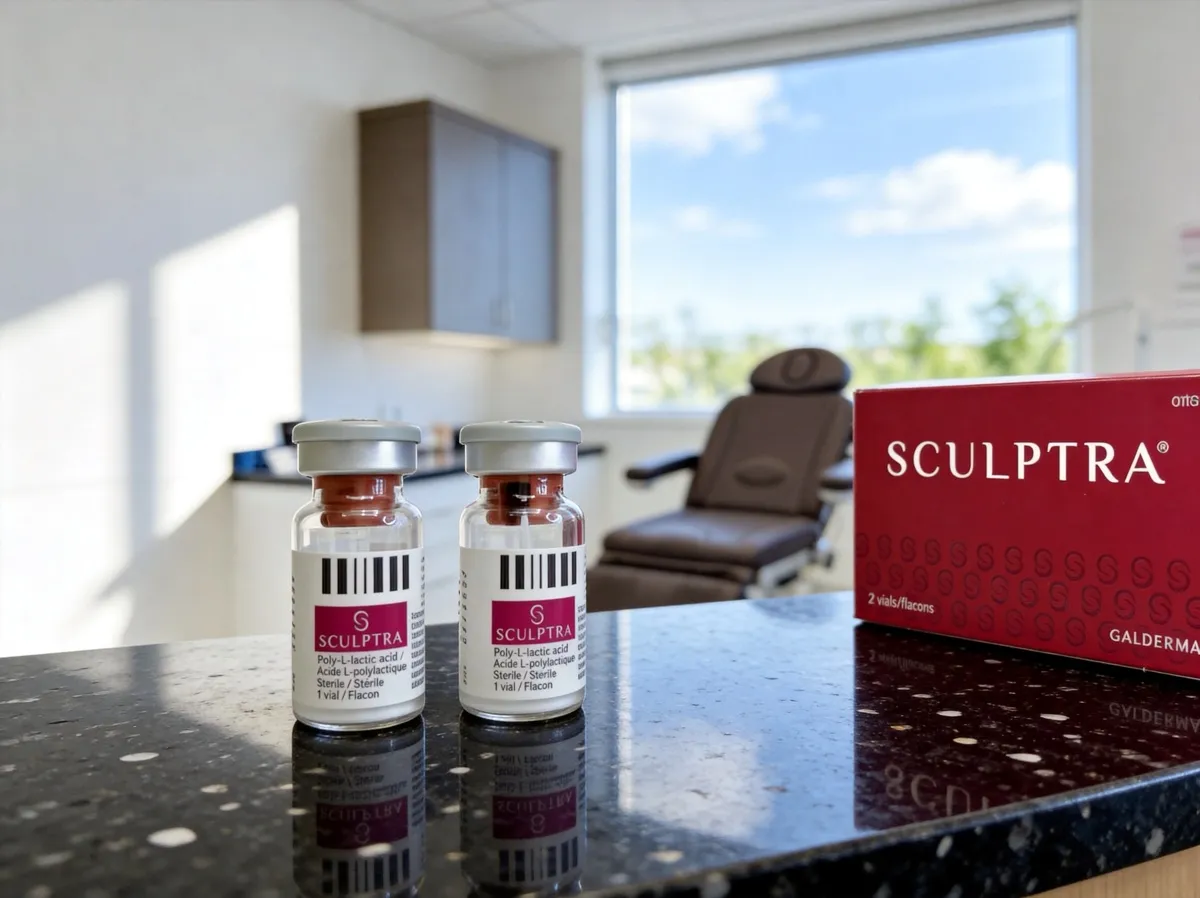
Platelet-rich plasma, or PRP, is prepared by separating and concentrating the platelet-rich portion of the patient's blood. In subcision with PRP, it is injected into the released area at the same visit. Sculptra, a collagen stimulator, can be placed there instead.
Subcision and PRP are offered at all five Metropolis offices: Downtown Los Angeles, Brentwood, Pasadena, Costa Mesa, and San Jose.
Rolling scars
A seriesStudies used 3 to 6 sessions, about 4 weeks apart
A few daysSwelling and tenderness usually settle within days
Off-labelNeither PRP nor Sculptra is FDA-approved for acne scars
Not sure which of your acne scars this suits? Which acne scar is it, and what treats it.
How subcision with PRP works.
Releases the tether
The instrument detaches the fibrous strands that pull the scar down, so the skin surface can lift.
Prompts new tissue
The controlled injury under the scar starts a repair response that forms new connective tissue.
PRP supports healing
In one review, PRP combined with subcision gave significantly better results than subcision alone. It does not behave like filler.
Or a spacer
Sculptra or filler placed in the released space may help keep the scar from tethering again; split-face studies proving this are still lacking.
Subcision has been shown to improve rolling, boxcar, and ice pick scars, but most consistently rolling and boxcar scars. Deep, narrow ice pick scars usually need a focused treatment such as TCA CROSS for scars. Your provider assesses each scar's shape and depth before recommending subcision or another treatment.
Is subcision right for you?
Often a good fit
- Rolling acne scars: wide, soft dips that look shadowed in side light
- Some boxcar scars, often alongside another treatment
- Acne that is already under control, or nearly so
- Adults comfortable with a series of visits and gradual change
Not a fit, or tell us first
- Active acne, infection, or cold sores in the area: treatment waits until it clears
- A bleeding or platelet disorder, or a blood thinner or other medicine that increases bleeding
- A history of keloids or raised scars
- Isotretinoin (Accutane) now or in the last 6 months
- Pregnancy or breastfeeding
Once breakouts are sufficiently controlled, or, in selected cases, while acne treatment continues, we develop a separate plan based on scar type.
Can acne scars be 100% removed?
Subcision improves the look of depressed acne scars; it does not erase them, and results vary with scar type and depth. Treatment is planned around each scar, and your provider can discuss what change is realistic for yours.
Can a 20 year old scar be removed?
An older scar can still be treated, and its age is less important than its type and depth. Rolling and boxcar scars respond most consistently to subcision; deep, narrow ice pick scars usually need a focused treatment such as TCA CROSS for scars. No treatment removes a scar completely.
What a subcision visit involves.
ConsultationWe map each scar by type and depth, then decide whether subcision fits and what goes with it
NumbingTopical or injected local anesthetic in the area
The releaseA needle or blunt cannula is moved under each scar to free the bands
PRP or SculptraPRP is drawn from your own blood at the visit and injected into the treated area; or Sculptra is placed instead
A seriesStudies used 3 to 6 sessions about 4 weeks apart; deeper scars often need more than one
The first daysSwelling, redness, and tenderness usually settle within a few days. Daily sunscreen helps protect against dark marks
PRP or Sculptra with subcision.
What goes into the released space is chosen for the scar. PRP is used to support skin repair and gradual collagen remodeling. It does not behave like traditional filler and does not create the same immediate structural volume.
Placed after subcision, compared. Label status checked 8 November 2026.
| Option | What it is | FDA status for acne scars |
|---|
| PRP | Your own blood, concentrated and injected at the visit | Not approved; off-label |
|---|
| Sculptra | Poly-L-lactic acid, which stimulates collagen and builds gradually | Approved for smile lines and cheek wrinkles; acne scars are off-label |
|---|
| Hyaluronic acid filler | Adds volume under the scar right away | Your provider explains the label for the product used |
|---|
PRP is not FDA-approved for acne scars; your dermatologist explains why it may still be recommended. PRP preparation systems are FDA-cleared to prepare platelet-rich plasma, most often to mix with bone graft in surgery and some to make a gel for chronic wounds; none is cleared for acne scars (checked 8 November 2026). One cleared in April 2026 states that its PRP "has not been evaluated for any therapeutic applications."
Sculptra is FDA-approved for smile lines and other facial wrinkles, and for fine lines and wrinkles in the cheeks. Using it after subcision for acne scars is off-label; your dermatologist explains why it may still be recommended.
Metropolis Matrix Protocol. Built for scarring and texture: subcision with Sculptra, Spectra MDF, then microneedling with PRP on top. Microneedling devices are FDA-authorized for facial acne scars, but not for delivering PRP into the skin.
How PRP is prepared, and how it differs from PRF: PRF therapy. More on Sculptra: Sculptra.
Risks of subcision and PRP.
Most reactions are short-lived. This list is not complete; your provider goes through it with you.
| Effect | What to know |
|---|
| Pain, swelling, redness, bruising | The most common effects. In one study, pain, swelling, and redness settled within 48 hours. |
| A collection of blood (hematoma) | Reported after subcision. A growing one needs to be drained; call us if a lump keeps enlarging. |
| Small bumps under the skin | Small blood-filled bumps may resolve over 1 to 2 months. With Sculptra, bumps can also appear weeks to months later. |
| Dark marks (hyperpigmentation) | Uncommon in studies. Tell us if your skin tends to darken after a breakout or injury. Strict sun protection afterward helps. |
| Numbness or tingling | From injury to a small skin nerve; it usually improves on its own within 6 to 18 months, and rarely persists. |
| Infection | Uncommon. Treatment is not done over active infection. |
| Vision changes, or severe or unusual pain | Call us right away. PRP injected into the face has rarely caused vision loss. |
A 2026 review found 10 published cases worldwide of vision loss after PRP injections, mostly between the eyebrows and on the forehead. It is rare, and it is serious. If you are considering subcision with PRP for forehead scars, ask how your provider reduces that risk.
Other options for acne scars.
Not every concern requires a laser. We also offer microneedling, PRP microneedling, PRP, PRF, PRF gel, chemical peels, TCA CROSS, and subcision.
Related: Undereye PRP and PRF
Subcision with PRP questions.
Does PRP help with scar tissue?
It may help when it is combined with subcision, which is what releases the scar tissue. Studies so far are small, and few compare subcision with PRP against subcision alone. PRP is not FDA-approved for acne scars.
Can I see subcision with PRP before and after photos?
We are gathering consented Metropolis photos of subcision with PRP before and after treatment. At your consultation, your provider can talk through what change is realistic for your scars.
How many sessions of subcision will I need?
In studies, people had 3 to 6 sessions about 4 weeks apart, and deeper scars often need more than one. Your plan is set after we see your scars.
When will I see results after subcision scar treatment?
Some improvement may be visible within the first few weeks, and scars keep changing as new collagen forms over the months that follow. Your provider can discuss the expected pace of change for your scars.
How much does subcision with PRP cost?
Cost depends on how many scars are treated, what is added, and how many sessions your plan needs, so we quote it at your consultation, before you start.
Should I choose PRP or Sculptra with subcision?
That depends on the scar. PRP supports repair and does not add volume the way filler does; Sculptra builds collagen gradually. Neither is FDA-approved for acne scars, and your provider explains why one may suit you.
Can I have subcision while I still have breakouts?
Treatment does not go over active infection or breakouts in the area. In selected cases, scar treatment can start while acne treatment continues.
Who performs subcision at Metropolis?
Subcision is listed at all five offices. Treatment availability varies by provider and location.
Sources: FDA 510(k) K250516, FDA, microneedling devices, FDA labeling for Sculptra, and peer-reviewed reviews and studies of subcision (Clin Cosmet Investig Dermatol 2023; J Cosmet Dermatol 2025 and 2026; J Cutan Aesthet Surg 2024; Skin Health Dis 2026; J Clin Aesthet Dermatol 2019).