

Skin laxity rarely announces itself all at once. You might first notice that your jawline isn’t quite as crisp in photos, the skin beneath your chin feels softer, or your face simply doesn’t have the firmness it once did. For patients who aren’t looking for surgery, radiofrequency has created another way to approach these changes.
Density RF is one such option. Rather than removing or resurfacing skin, this non-invasive technology uses controlled radiofrequency energy to heat tissue and support collagen remodeling.
Yet it’s not the only RF device patients may encounter. XERF has also entered the conversation, making XERF vs. Density RF a useful comparison for anyone researching non-surgical tightening.
The names may sound similar, but the technologies deliver RF energy differently. Keep reading to understand those differences, what they mean for treatment, and why Metropolis Dermatology offers Density RF for patients seeking firmer, more rejuvenated-looking skin.
RF, Without the Jargon
Before comparing devices, it helps to answer a more basic question: what is RF skin tightening, and why is heat involved? The science becomes much easier to understand once you separate radiofrequency from lasers and other energy-based treatments.
Radiofrequency treatment sends radiofrequency energy into tissue, where resistance generates controlled heat. Depending on the device, that heat can reach different tissue depths while the skin’s surface is protected with cooling.
Collagen is one of the main structural proteins responsible for the skin’s support. With age, collagen production and organization change, contributing to laxity, fine lines, and softer facial contours.
Controlled RF heating is used to create thermal effects within targeted tissue and stimulate remodeling. Those changes develop gradually rather than producing the kind of immediate structural repositioning possible with surgery.
While the more noticeable firming develops gradually as collagen remodels over time, patients may also notice an earlier tightening effect. Controlled RF heating can cause existing collagen fibers to contract, which may create some immediate firmness before longer-term collagen remodeling becomes more visible.
So, does RF skin tightening work? It can improve the appearance of mild to moderate laxity in appropriately selected patients, but outcomes vary. Age, skin condition, treatment area, RF technology, settings, and individual collagen response can all influence the result.
The key is choosing the right approach for the right concern.
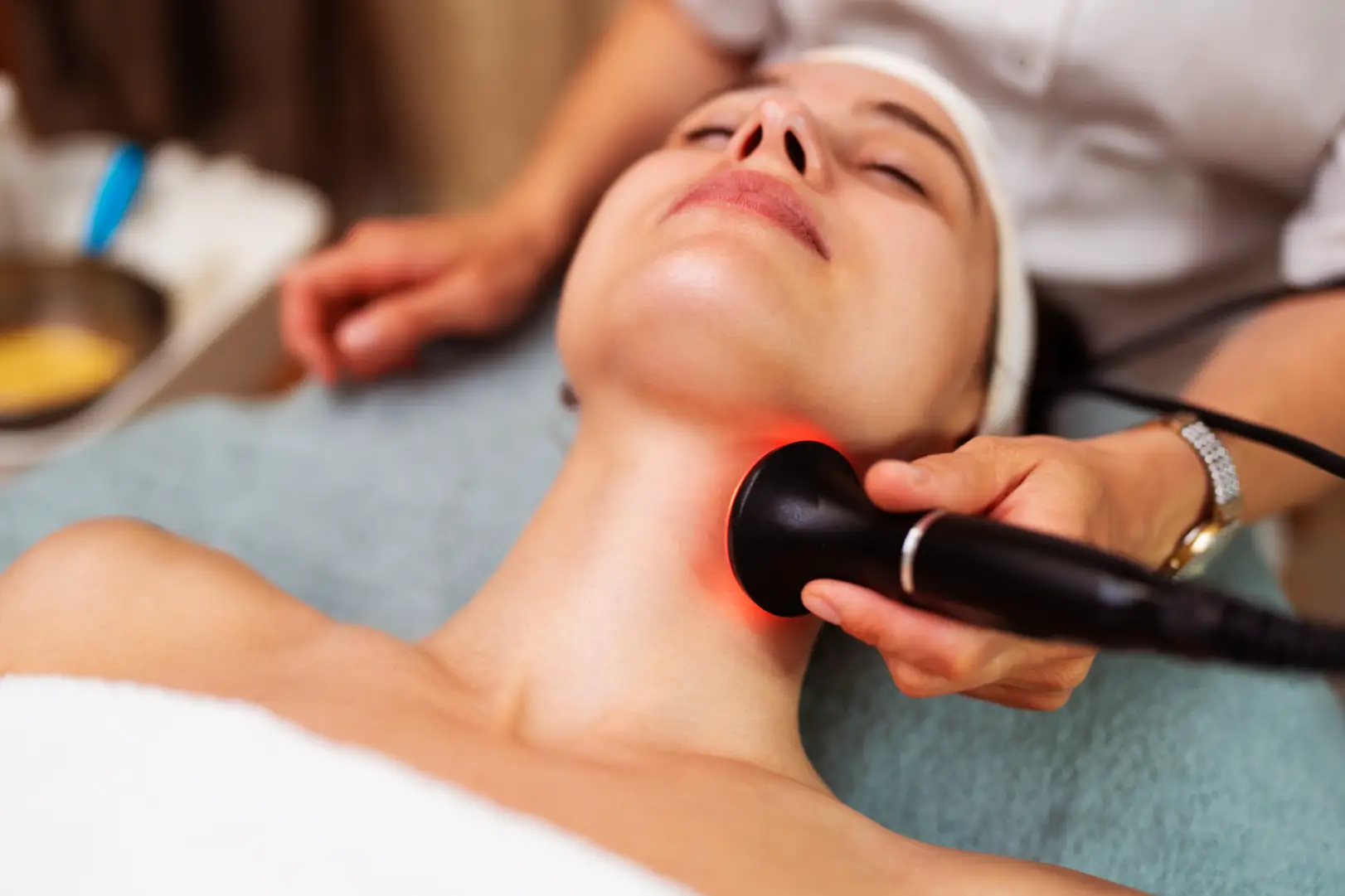
XERF vs. Density RF: Where They Differ
XERF and Density RF share an important idea: both are non-invasive radiofrequency technologies designed to deliver controlled heat without needles. Look beneath that similarity, however, and their energy-delivery strategies are notably different.
Density Uses Monopolar and Bipolar RF
One of Density’s defining characteristics is its combination of monopolar RF skin tightening and bipolar radiofrequency. Density operates at 6.78 MHz and can sequentially deliver monopolar and bipolar RF energy.
Why combine them? Monopolar RF is designed to send energy deeper into tissue. Bipolar RF concentrates energy more superficially between electrodes. Density’s sequential heating technology brings these two approaches together so that different tissue depths can be addressed during treatment.
This distinction is especially useful when people encounter the term RF bipolar skin tightening online and assume bipolar and monopolar systems are competing versions of the same thing. They aren’t necessarily competitors. They have different energy distributions.
Density uses that difference intentionally. Its technology combines deeper monopolar heating with more superficial bipolar heating rather than asking one RF mode to handle the entire treatment strategy.
For patients at Metropolis Dermatology, that provides a versatile option for concerns such as loose or sagging skin in areas including the face and neck.
XERF Takes a Dual-Frequency Monopolar Approach
A XERF treatment reaches the RF goal differently. Instead of combining monopolar and bipolar RF, XERF is a monopolar RF platform that uses two frequencies: 6.78 MHz and 2 MHz.
Those frequencies create different heating patterns and allow the system to address tissue at multiple depths. This is an important correction to a common misconception about these devices. XERF isn’t simply another version of Density, and Density isn’t simply another version of XERF.
Their fundamental strategies differ:
- XERF combines two frequencies within a monopolar RF approach.
- Density combines monopolar and bipolar RF energy at 6.78 MHz.
That distinction sits at the heart of XERF vs. Density RF. Both approaches use controlled thermal energy to support skin remodeling, but the engineering behind how that energy is distributed isn’t the same.
Density Uses Sequential Heating
Density’s sequential heating technology deserves a closer look because it’s more than a technical detail. It explains why the device can address different tissue levels without switching between completely separate platforms.
The manufacturer describes Density as delivering monopolar and bipolar energy sequentially within a pulse. Monopolar energy penetrates more deeply, while bipolar energy targets thinner, more superficial tissue layers.
Think of it less as choosing between deep and shallow treatment and more as creating a broader thermal strategy. That’s one of the notable RF skin tightening benefits of a dual-mode system. A provider can approach laxity with energy designed to affect multiple levels rather than treating skin firmness as though it happens at only one depth.
Density also allows treatment to be adapted according to the patient’s skin condition and treatment area. That’s important because laxity around the eyes isn’t identical to laxity along the jawline or on the body. Customization matters more than simply turning the energy higher.
XERF Uses Multiple Heating Depths
XERF’s dual-frequency design also aims to broaden the treatment area vertically through tissue. The platform uses 6.78 MHz and 2 MHz RF and offers treatment modes designed around shallow, middle, and deeper heating patterns.
That makes XERF an interesting development within monopolar RF technology. Its approach isn’t based on adding bipolar energy. Instead, it varies the RF frequency and pulse pattern to alter the way heat distributes through tissue.
From a patient’s perspective, this is why comparing the best RF skin tightening device based on a single specification isn’t particularly helpful. More frequencies don’t automatically make one device superior. Neither does having both monopolar and bipolar modes automatically make another device universally better.
The clinically useful question is how a particular technology fits the patient’s skin, anatomy, degree of laxity, comfort expectations, and treatment goals. At Metropolis Dermatology, Density is the RF technology available for this approach to non-invasive tightening.
Density Responds to Skin Resistance
Skin isn’t electrically identical from one person to another. Resistance, or impedance, can vary, which can influence how RF energy travels through tissue. Density addresses this with real-time impedance feedback.
The system measures tissue resistance and adjusts RF energy delivery accordingly. The manufacturer’s technology information describes this as a way of correcting energy output based on measured resistance so that the targeted energy can be delivered more consistently. This is an important feature because energy-based treatment isn’t simply about choosing a number on a screen.
The way energy interacts with actual tissue matters. Real-time feedback gives the system another layer of information during treatment, supporting a more individualized approach to RF delivery.
That technology doesn’t remove the need for an experienced provider. Device feedback and clinical judgment work together, particularly when different facial areas have different thicknesses, contours, and sensitivities.
Both Technologies Prioritize Cooling
Heating tissue enough to create a therapeutic response while protecting the skin’s surface is a central challenge of non-invasive RF treatment. That’s why cooling technology matters in both systems.
Density incorporates adjustable cryogen cooling. Its system offers multiple cooling levels and monitors skin temperature, helping protect the epidermis while RF energy is delivered beneath it. XERF also uses integrated cryogen cooling alongside its RF delivery.
For patients, this technology can translate into a more tolerable treatment experience. You may still notice heat or other sensations as energy is delivered because RF treatment is intentionally creating controlled thermal effects.
Comfort also varies from person to person. The important takeaway isn’t that one cooling system makes treatment sensation-free. It’s that both platforms pair heating with surface-cooling technology as part of their approach.

Density Doesn’t Break the Skin
There’s another distinction worth making, although this one separates Density from RF microneedling rather than XERF. The Density treatment described here is non-invasive. It delivers RF without using microneedles to puncture the skin.
That means patients shouldn’t automatically equate all radiofrequency treatments with RF microneedling. Microneedling RF uses needles to place energy at selected depths beneath the skin. Non-invasive Density RF sends energy through the skin using external treatment tips.
Those are very different experiences. For someone who wants skin tightening but would rather avoid needles and the recovery associated with more invasive procedures, Density provides another route to RF-based collagen remodeling.
Put the Technology in Context
XERF and Density RF both demonstrate how far non-invasive skin tightening has evolved, but they take different technological routes. XERF uses dual-frequency monopolar RF, while Density combines monopolar and bipolar RF to address deeper and more superficial tissue through sequential heating.
At Metropolis Dermatology in Los Angeles, Pasadena, LA’s Westside (Brentwood), Costa Mesa, and San Jose, CA, patients can explore Density RF as part of a personalized approach to firmer, more youthful-looking skin.
A consultation can help determine whether non-invasive RF fits your degree of laxity, treatment goals, and expectations, so the technology serves your skin rather than the other way around. Call us today!