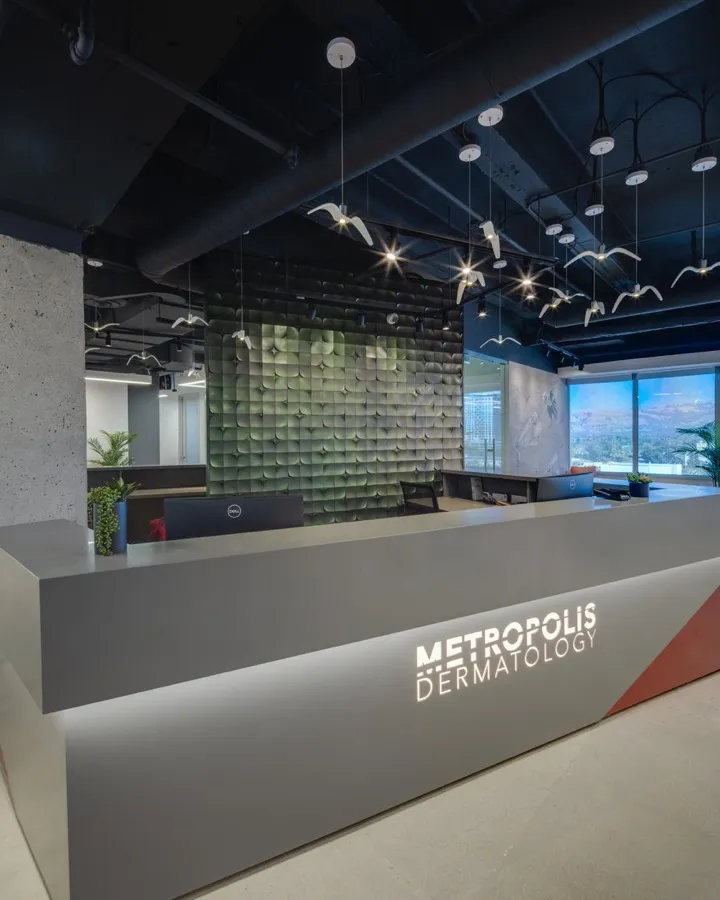
Laser tattoo removal in Los Angeles at Metropolis Dermatology.
Laser tattoo removal breaks ink into fragments your body clears gradually over several spaced sessions. Anyone promising full removal in one or two visits is setting an expectation the biology cannot meet.
The number of sessions depends on the ink, location, age of the tattoo, skin tone, and how the tattoo was applied. We set expectations based on the individual tattoo rather than promising a fixed number of visits.
Several sessionsMultiple treatments are usually required
Weeks apartSkin heals and your body flushes out ink between sessions
Colors differColored inks are generally less responsive than dark ink
Sun protectionProtect treated skin from the sun for 3 months
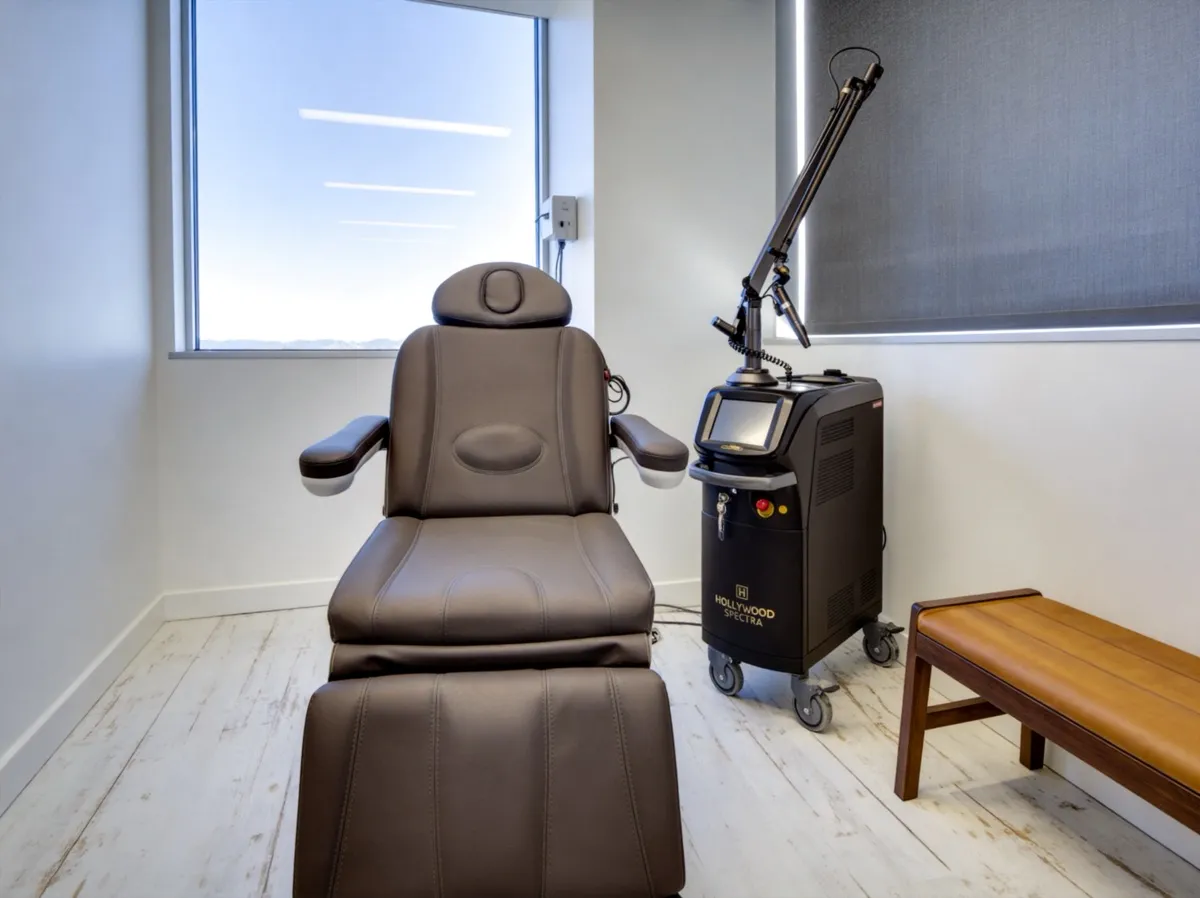
Hollywood Spectra is our tattoo laser in Downtown LA, Brentwood, Pasadena, and San Jose. TriBeam Pro is also used; ask which office has it when you book.
What our tattoo lasers are FDA-cleared to treat.
Lasers are cleared by the FDA through a 510(k), not approved. Each of our tattoo lasers is cleared for named ink colors. A clearance says what a laser may be used for; it is not a promise that a given tattoo will clear.
Tattoo clearances (FDA 510(k) database, checked 8 November 2026)
| Laser | Maker | Pulse | Cleared tattoo inks | Skin types named | Clearance |
|---|
| Hollywood Spectra | Lutronic (now Cynosure Lutronic) | Nanosecond, Q-switched Nd:YAG | 1064 nm: dark ink (black, blue, brown). 532 nm: light ink (red, tan, purple, orange, sky blue, green) | None named | K213569, 4 February 2022 |
|---|
| TriBeam | Jeisys Medical | Nd:YAG | 1064 nm: dark ink (black, blue, brown). 532 nm: light ink (red, tan, purple, orange, sky blue, green) | None named | K251464, 3 October 2025 |
|---|
Hollywood Spectra and TriBeam are cleared for both dark and light inks but name no skin types for any use, so a skin type is never implied by their clearance.
How laser tattoo removal works.
Finds the ink
Tattoo particles in the skin absorb the laser light.
Breaks it up
The ink heats so fast that it fragments into smaller particles.
Your body clears it
Cells pick up the fragments and carry them away through the lymphatic system, which takes time.
Very short pulses
Hollywood Spectra fires in nanoseconds, billionths of a second. A pico laser fires in a few hundred trillionths of a second.
Each device has a different purpose. We select the technology, wavelength, depth, and settings based on your skin rather than asking your skin to fit a particular device.
Hollywood Spectra and TriBeam. Hollywood Spectra and TriBeam are versatile pigment-focused lasers. By changing the wavelength, handpiece, and settings, we can address concerns such as unwanted pigmentation, uneven tone, and selected tattoos.
A laser cannot safely break down every layer of ink in one session, and your body also needs time to flush out the ink between sessions.
Which tattoo ink colors are hardest to remove.
A single laser wavelength cannot remove all ink colors. Hollywood Spectra and TriBeam Pro are cleared at 1064 nm for dark ink and at 532 nm for lighter inks: red, tan, purple, orange, sky blue, and green.
Ink colors in our lasers' FDA clearances and in published reviews (read 8 November 2026)
| Ink | Cleared on our lasers | What to know |
|---|
| Black, blue, brown | 1064 nm on Hollywood Spectra and TriBeam | Dark ink; still takes several sessions |
|---|
| Red, orange | 532 nm on Hollywood Spectra and TriBeam | Colored pigments are generally less responsive to treatment |
|---|
| Green | 532 nm on Hollywood Spectra and TriBeam | A 2015 review calls green recalcitrant to Nd:YAG lasers |
|---|
| Purple, tan, sky blue | 532 nm on Hollywood Spectra and TriBeam | Colored pigments are generally less responsive to treatment |
|---|
| Cosmetic tattoos and permanent makeup | Not named in any of our lasers' clearances | Inks with iron oxide or titanium dioxide are difficult to remove and can turn darker; a test spot may be recommended |
|---|
Some cosmetic inks contain iron oxide or titanium dioxide. Instead of fading, these inks may turn darker, even black, after laser treatment. Further laser sessions often improve it gradually, but tell us first if your tattoo is cosmetic.
Laser tattoo removal on darker skin.
Skin type is the first question here, not a footnote to it.
The laser is aimed at ink, but the pigment in your skin absorbs laser light too. Reviews of laser tattoo removal find that patients with darker skin are at higher risk of complications: lighter or darker patches of skin, which can last after several sessions, scarring, and changes in texture.
For darker skin, a 2015 review names the Q-switched 1064 nm Nd:YAG as the laser of choice. A 2024 review of treatment in dark skin advises using the lowest energy that still reaches the treatment goal, and shows a skin type IV patient with permanent loss of color after multiple tattoo sessions.
Each device has a different purpose. We select the technology, wavelength, depth, and settings based on your skin rather than asking your skin to fit a particular device.
If the laser you asked about is not right for your skin, we will tell you, and we will tell you what we would use instead and why.
Is laser tattoo removal right for you?
Often a good fit
- A black, blue, or brown tattoo, the inks both of our tattoo lasers are cleared for
- An amateur tattoo, which is usually smaller, lighter in color, and applied more superficially
- Patience for several sessions spaced weeks apart
- Willingness to keep the area out of the sun for 3 months after each session
Not a fit, or tell us first
- Pregnancy or breastfeeding: treatment waits until after
- A weakened immune system, since laser tattoo removal needs a healthy one to work
- Isotretinoin, now or in the past, or gold therapy
- Cold sores (herpes) in the area, or a tendency to form keloids
- A tan on the area
- A cosmetic tattoo or permanent makeup, which can turn darker
If the treatment you requested is not appropriate for your skin, we will explain why and recommend a safer or more effective alternative.
What to expect at a laser tattoo removal visit.
ConsultationWe look at the ink colors, location, age of the tattoo, your skin tone, and how it was applied, then choose the laser and settings
Test spotMay be recommended before a full session, especially for cosmetic inks
In the roomYou and your provider both wear eye protection
How it feelsA numbing cream or shot can prevent discomfort and pain
Right afterTreated skin turning white right away is the expected response to Q-switched treatment
Next few daysSome redness, swelling, and a little blistering; blisters and crusting can occur
AftercareAntibiotic or simple ointment for 10 to 14 days, as your provider directs
Sun careProtect treated skin from the sun for 3 months
Next sessionWeeks later, timed by your provider; a 2015 review gives roughly every 8 weeks
How many laser tattoo removal sessions, and what results to expect.
Multiple treatments are usually required. After each treatment, your tattoo should lighten. Too often, people stop before they see the full result.
Professional tattoos are placed deeper in the skin and generally require repeated treatments. Amateur tattoos are usually smaller, lighter in color, and applied more superficially.
We set expectations based on the individual tattoo rather than promising a fixed number of visits.
When a tattoo will not fully clear
Complete removal is not always possible. A 2015 review advises that patients be told clearance is often incomplete, and some ink may still show after a full course.
Why sessions are spaced weeks apart
Time between treatments is also necessary for your health. Your body also needs time to flush out the ink.
Other ways to remove a tattoo.
Tattoo removal methods (American Academy of Dermatology and a 2015 review, read 8 November 2026)
| Method | How it works | What to know |
|---|
| Laser tattoo removal | Breaks ink into particles the body clears | Several sessions; complete removal is not always possible; this page |
|---|
| Fractional laser resurfacing | A different kind of laser treatment of the skin | Reported effective for traumatic, allergic, and multicolored tattoos |
|---|
| Dermabrasion, chemical destruction, cryosurgery, electrosurgery, surgical excision | Destroy or remove the skin that holds the ink | Older methods that often result in incomplete removal |
|---|
| Salabrasion | Top layers of skin removed, then salt rubbed in | Extremely painful; serious infection and a scar are possible |
|---|
| Removal creams and do-it-yourself kits | Usually strong acids | No evidence any of them removes a tattoo; can cause a rash, burn, or permanent scar; the FDA warns consumers about them |
|---|
If the treatment you requested is not appropriate for your skin, we will explain why and recommend a safer or more effective alternative.
Laser tattoo removal risks and side effects.
Most side effects are short-lived: some redness, swelling, and a little blistering. Permanent side effects can occur, including scarring and lighter or darker skin, and the risk of complications is higher on darker skin.
This list is not complete; ask about your own risk at your consultation.
| Effect | What to know |
|---|
| Redness, swelling, blistering, crusting | Common after treatment, and part of healing. |
| Light or dark spots | These spots tend to disappear within 6 to 12 months. After multiple sessions they can be long-term, especially on darker skin. |
| Scarring and changes in texture | Can be permanent. Texture change is not uncommon after multiple treatments. |
| Cosmetic inks turning darker | Inks with iron oxide or titanium dioxide may darken instead of fading; further sessions often improve it gradually. |
| Ink left behind | Clearance is often incomplete. |
| Eye injury | Laser light can injure the eye, which is why eye protection is worn throughout. |
| A blister that worries you, signs of infection, or skin that turns darker or lighter | Call us so we can see you and adjust your plan. |
When someone lacks medical training, scarring, changes to the skin's texture, and burns are more common, which is why who treats you, and how, matters as much as the laser.
Nd:YAG laser tattoo removal near you: our lasers by office.
Hollywood Spectra is a Q-switched Nd:YAG laser made by Lutronic, now part of Cynosure Lutronic. It produces two wavelengths, 1064 nm and 532 nm, in nanosecond pulses.
TriBeam Pro, made by Jeisys Medical, is an Nd:YAG laser cleared for the same dark and light tattoo inks as Hollywood Spectra.
Downtown LAHollywood Spectra
BrentwoodHollywood Spectra
PasadenaHollywood Spectra
San JoseHollywood Spectra
Costa MesaAsk which laser this office uses
TriBeam ProOffice to confirm
If the laser you asked about is not right for your skin, we will tell you, and we will tell you what we would use instead and why.
Hollywood Spectra · Pico laser and alternatives · All our lasers
Laser tattoo removal questions.
How many laser tattoo removal sessions will I need?
Multiple treatments are usually required. The number of sessions depends on the ink, location, age of the tattoo, skin tone, and how the tattoo was applied, so we set expectations based on your tattoo rather than a fixed number of visits.
Can every tattoo be removed completely?
No. Complete removal is not always possible, and clearance is often incomplete. Anyone promising full removal in one or two visits is setting an expectation the biology cannot meet.
Which tattoo colors are hardest to remove?
Colored pigments are generally less responsive to treatment than dark ink, and a single laser wavelength cannot remove all ink colors. A 2015 review calls green recalcitrant to Nd:YAG lasers. Cosmetic inks with iron oxide or titanium dioxide can turn darker.
Is laser tattoo removal safe on dark skin?
It can be done, with more care. Darker skin carries a higher risk of lighter or darker patches and scarring. The clearances for Hollywood Spectra and TriBeam Pro name no skin types, and your provider sets the laser and energy for your skin.
What is an Nd:YAG laser for tattoo removal?
Nd:YAG (neodymium-doped yttrium aluminum garnet) is the laser source that produces the 1064 nm wavelength cleared for dark tattoo ink; doubled in frequency, it gives the 532 nm wavelength cleared for lighter inks. Hollywood Spectra and TriBeam are Nd:YAG lasers.
What is the difference between a picosecond and a Q-switched laser?
The length of the pulse. Hollywood Spectra fires in nanoseconds; picosecond lasers fire in a few hundred trillionths of a second. Read more about the pico laser and how the two compare.
Does laser tattoo removal hurt?
Tattoo removal can be painful. A numbing cream or shot can be used to prevent discomfort and pain.
What is the aftercare, and is there downtime?
Expect some redness, swelling, and a little blistering, and possibly crusting. Ointment is applied for 10 to 14 days as your provider directs, and treated skin needs protection from the sun for 3 months.
What happens to your skin after tattoo removal?
Treated skin turning white right away is the expected response to Q-switched treatment. Over the next few days expect some redness, swelling and a little blistering, and possibly crusting. Ointment is applied for 10 to 14 days as your provider directs, and treated skin needs protection from the sun for 3 months. Light or dark spots tend to disappear within 6 to 12 months, but after multiple sessions they can be long-term, especially on darker skin.
Can permanent makeup or a cosmetic tattoo be removed with a laser?
Sometimes, with caution. Cosmetic inks often contain iron oxide or titanium dioxide, which may turn darker instead of fading, so a test spot may be recommended first.
Can I have laser tattoo removal while pregnant or breastfeeding?
No. The American Academy of Dermatology advises that women who are pregnant or breastfeeding should not be treated.
Can I get laser tattoo removal in Brentwood, Downtown LA, Pasadena, Costa Mesa, or San Jose?
Ask about it at any of our five offices. Downtown LA, Brentwood, Pasadena, and San Jose have Hollywood Spectra; in Costa Mesa, ask which laser the office uses. See laser tattoo removal in Costa Mesa, laser tattoo removal in Pasadena, and laser tattoo removal in San Jose.
How much does laser tattoo removal cost?
Cost depends on the tattoo and how many sessions your plan needs, so we quote it at your consultation, before you start.
Who performs laser tattoo removal at Metropolis?
Treatment availability varies by provider and location. We match you by office and availability.
Sources: FDA 510(k) clearances for Hollywood Spectra (K213569), TriBeam (K251464); the American Academy of Dermatology on tattoo removal; and peer-reviewed reviews of laser tattoo removal (2015), cosmetic treatment in dark skin (2024), and laser complications (2026).