
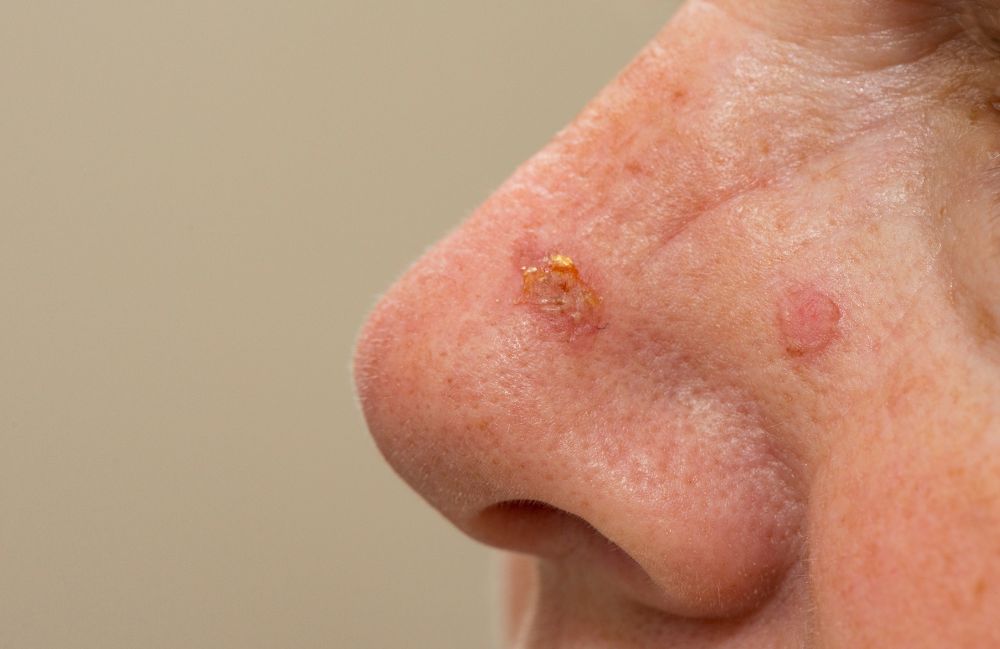
If you’ve noticed rough, scaly patches developing on sun-exposed areas of your skin, it could be a sign of actinic keratosis (AK)—a common precancerous skin condition caused by long-term sun damage. Although not cancerous in its early stages, actinic keratosis can progress into squamous cell carcinoma if left untreated.
At Metropolis Dermatology in Pasadena, our experienced dermatology team offers advanced, non-invasive treatment options to help eliminate AKs and reduce your risk of skin cancer.
What Is Actinic Keratosis?
Actinic keratosis is a precancerous skin lesion that forms after years of repeated UV exposure. These lesions most often develop on the face, ears, scalp, chest, forearms, and hands—areas that receive the most sun over time.
Though often small and painless, AKs are considered a warning sign that your skin has been significantly damaged by UV radiation and may be at risk for future malignancy.
What Causes Actinic Keratosis?
Actinic keratoses develop when ultraviolet (UV) rays from sunlight or tanning beds cause gradual DNA damage to skin cells. Over time, this can result in abnormal cell growth and the formation of rough, scaly patches.
You may be at higher risk if you:
- Have fair skin, blue or green eyes, or blonde/red hair
- Are over the age of 40
- Spend a lot of time outdoors or in direct sunlight
- Have a weakened immune system due to illness or medication
- Used indoor tanning beds regularly
Common Symptoms of Actinic Keratosis
AKs are typically dry, crusty, or scaly to the touch. Common signs include:
- Rough, sandpaper-like patches on sun-exposed areas
- Pink, tan, reddish, or flesh-colored lesions that may be flat or slightly raised
- Itchiness, burning, or stinging in the affected area
- Persistent dryness or flaking that doesn’t improve with moisturizers
Because AKs can sometimes be hard to distinguish from early skin cancers, early evaluation is crucial.
How We Treat Actinic Keratosis
At Metropolis Dermatology, we offer multiple options for effectively removing AKs and improving overall skin health. Your treatment plan will depend on the number, size, and location of lesions, as well as your skin type.
Our treatments include:
- Prescription creams, such as 5-fluorouracil (5-FU), imiquimod, or diclofenac, to eliminate abnormal cells over time
- Cryotherapy – Freezes off individual lesions using liquid nitrogen
- Photodynamic therapy (PDT) – Combines a topical solution with light exposure to destroy AK cells while promoting skin renewal
- Laser treatments – Non-invasive laser resurfacing to remove precancerous patches and rejuvenate sun-damaged skin
Early treatment reduces your risk of squamous cell carcinoma and improves skin appearance and comfort.

Frequently Asked Questions About Actinic Keratosis
Is actinic keratosis considered skin cancer?
No—but it’s classified as a precancerous condition. If untreated, it may progress into squamous cell carcinoma, which is a form of skin cancer.
Can actinic keratosis go away without treatment?
In rare cases, small lesions may temporarily fade, but they often return. Medical treatment is strongly recommended to prevent progression.
How is actinic keratosis diagnosed?
A dermatologist will examine your skin and may perform a biopsy if there is concern that a lesion could be cancerous.
Can you prevent actinic keratosis from forming?
Yes. Sun protection is key. Wear broad-spectrum sunscreen daily, avoid peak sun hours, wear protective clothing, and steer clear of tanning beds.
How often should I get checked for AKs?
Patients with a history of actinic keratosis—or high UV exposure—should schedule routine skin exams every 6–12 months to monitor changes and catch new lesions early.
Hear from
Real Patients






Don’t Wait on Skin Concerns—Treat Precancers Early
Actinic keratoses are a sign that your skin has experienced serious sun damage—but the good news is, early action makes a big difference. At Metropolis Dermatology in Pasadena, CA, we provide expert evaluation and treatment for AKs using the latest technologies in dermatology. Book your consultation today to keep your skin healthy, clear, and cancer-free.